
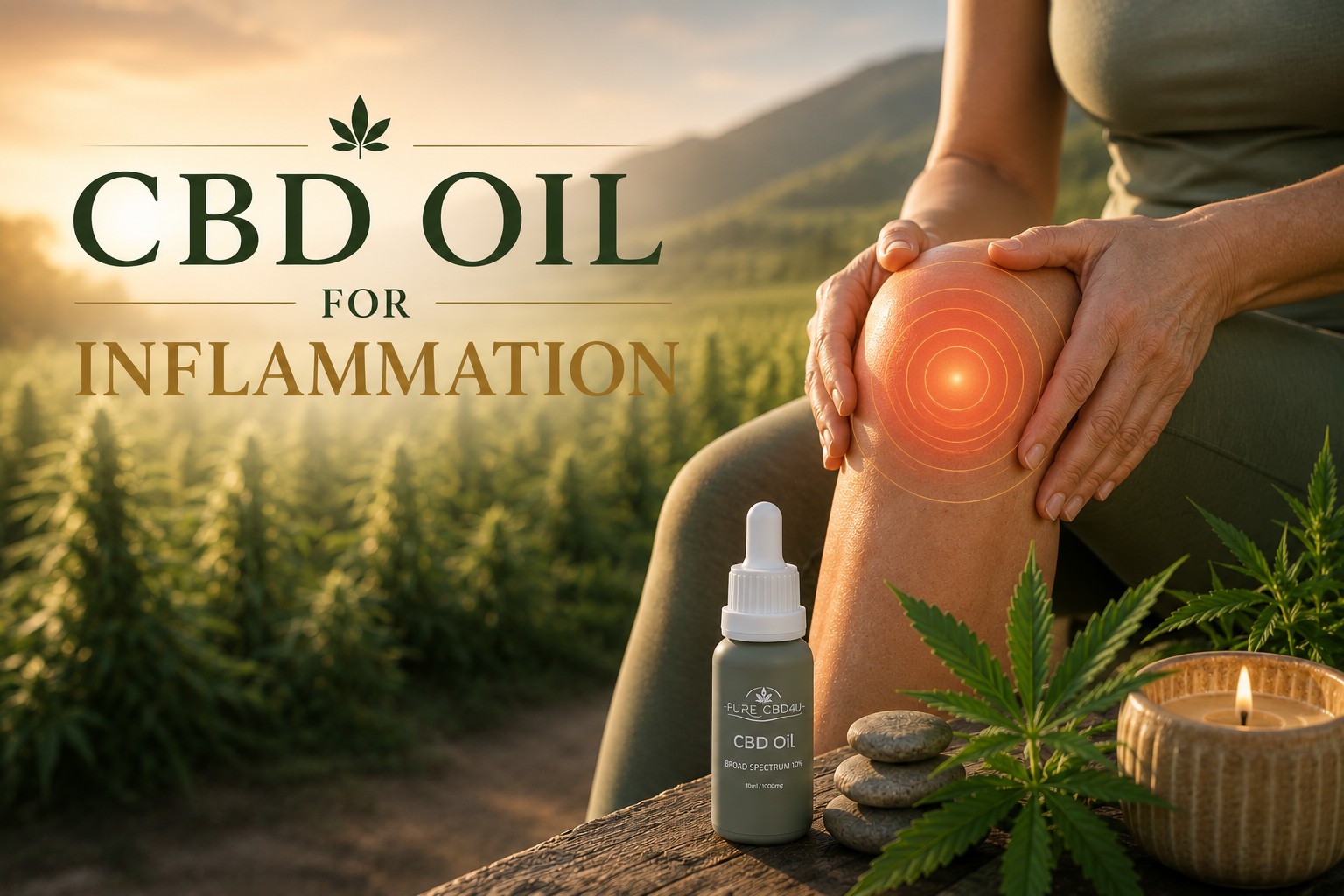
Inflammation has become one of the most discussed words in modern health, and also one of the most misunderstood. It’s simultaneously something the body cannot live without and something that, when it persists in the wrong context, becomes a driver of broader health problems. Understanding what inflammation actually is — and where CBD oil for inflammation, anti-inflammatory CBD research, and hemp anti-inflammatory properties each fit — requires starting with the biology rather than the marketing.
Inflammation Is a Biological Process, Not a Disease
The inflammatory response is one of the immune system’s fundamental tools. When tissue is damaged — whether through injury, infection, intense exercise, or exposure to irritants — the body sends chemical signals that direct immune cells to the affected area. Blood flow increases. White blood cells arrive. The tissue becomes warm, sometimes swollen, sometimes painful. This is acute inflammation doing exactly what it’s supposed to do: creating conditions for repair.
Most acute inflammation is short-lived. The threat resolves, the signals diminish, and the tissue heals. The problem arises when inflammation doesn’t resolve cleanly — either because the triggering stimulus persists, or because the regulatory mechanisms that normally return the body to homeostasis aren’t functioning efficiently. This is what researchers generally call chronic inflammation: a lower-grade, sustained inflammatory state that sits below the threshold of obvious symptoms but influences how the body functions over time.
Chronic inflammation is associated with a wide range of conditions — cardiovascular disease, metabolic disorders, joint problems — though the relationships are complex. Most people without a diagnosed inflammatory condition have a subtler question: how does everyday inflammatory activity affect recovery and general physical resilience? And what role might cannabidiol play?
How the Body Regulates Inflammation
At the molecular level, inflammation is orchestrated by signalling proteins called cytokines — some pro-inflammatory, some anti-inflammatory — whose balance determines whether a response escalates or resolves. The endocannabinoid system has an interesting relationship with this regulatory machinery. Endocannabinoids interact with receptors found throughout immune tissue, and these interactions appear to influence how inflammatory signals are modulated. This is one reason researchers became interested in CBD oil for inflammation: the system that processes cannabinoids overlaps substantially with the system that regulates inflammatory responses.
How Researchers Think CBD May Interact with Inflammatory Pathways
Research into CBD inflammation specifically, and inflammation and cannabinoids more broadly, suggests CBD doesn’t work through a single well-defined anti-inflammatory mechanism. Instead, research suggests it may interact with multiple pathways simultaneously — some via the endocannabinoid system, others through separate receptor systems including TRPV1 channels and certain serotonin receptors that have their own connections to inflammatory signalling.
In laboratory and animal studies, CBD has consistently shown effects on pro-inflammatory cytokine production — reducing the expression of signalling molecules associated with amplifying inflammatory responses. Early evidence also suggests CBD may influence oxidative stress pathways, which interact with inflammation in complex ways. These findings have been replicated across enough different model systems to suggest something real is happening at a biological level.
The honest qualification is that the evidence base shifts considerably when you move from animal studies to human trials. Human research on CBD and inflammation specifically is still relatively limited — most rigorous human trial data involves pain-adjacent conditions rather than measuring inflammatory markers directly. Scientists are continuing to investigate what the laboratory findings mean in practice, and the picture is not yet complete.
The Connection Between Exercise, Recovery and Inflammation
For many people exploring CBD for recovery inflammation or natural inflammation support more broadly, the context is physical: muscle soreness after training, joint discomfort after sustained activity, or the general sense of fatigue that follows demanding exercise. This is worth addressing specifically because it’s one of the more plausible and better-studied areas for CBD’s potential role.
Intense exercise produces acute inflammation as part of the natural recovery process. Muscle fibres experience micro-damage, the immune system responds, and repair begins. This is normal and beneficial — it’s part of how training adaptation works. The challenge is when inflammation from one session hasn’t resolved before the next begins, or when recovery generally feels slower than expected.
Research on CBD for recovery inflammation is developing, with a modest but growing number of studies examining markers like CRP and muscle recovery rates in active populations. The results are promising but early-stage. Our CBD oil for recovery article explores this specific application in more depth.
What Current Evidence Does and Doesn’t Support
Being precise about what the evidence actually supports is important here. What research clearly supports is that CBD interacts with biological systems relevant to inflammation — this is established at a mechanistic level. What research suggests but hasn’t firmly established is that these interactions translate into meaningful anti-inflammatory effects in everyday wellness contexts for generally healthy people.
CBD oil for inflammation should not be understood as an anti-inflammatory medication or a substitute for one. The hemp anti-inflammatory properties being investigated by researchers are real and worth taking seriously; they’re simply not equivalent to the well-characterised mechanisms of established drugs like NSAIDs, and making that comparison would overstate what the evidence currently shows.
What seems reasonable to say is this: CBD oil for inflammation support appears to interact with inflammatory pathways in ways that may assist the body’s natural regulatory processes. For people interested in CBD recovery support as part of a broader wellness approach, the biological rationale is sound even if the clinical evidence is still maturing. Our CBD oil benefits guide and the full spectrum vs broad spectrum CBD comparison both offer useful context for thinking about CBD in this light.
Practical Considerations
If you’re considering CBD for inflammation support, a few practical points are worth keeping in mind.
Spectrum type matters somewhat here. Full spectrum CBD retains the plant’s complete range of cannabinoids and terpenes, and some research suggests that terpenes and minor cannabinoids may contribute to anti-inflammatory effects through their own pathways — a concept sometimes called the entourage effect. Broad spectrum CBD offers a similar profile without trace THC. Both are reasonable choices; CBD isolate may miss some of this additional activity, though the evidence on entourage effects for inflammation specifically is still being studied.
CBD oil benefits inflammation research increasingly points to lifestyle factors as inseparable from the picture. Sleep deprivation measurably increases pro-inflammatory cytokines; diet, activity, and stress have documented effects on inflammatory biomarkers. CBD as part of a routine that addresses these factors is a different proposition than CBD in isolation. Our CBD oil for daily wellness guide explores this broader context.
For dosing, our CBD dosage guide and the how to choose high-quality CBD oil resource are the most practical starting points. Product quality matters particularly here: inaccurate labelling makes any personal evaluation of CBD and inflammation meaningless. Anyone with a diagnosed inflammatory condition or on anti-inflammatory medication should speak with their doctor first — CBD can interact with certain medications through shared liver metabolism pathways.
Frequently Asked Questions
Does CBD reduce inflammation?
Laboratory and animal studies consistently show CBD interacting with pro-inflammatory signalling pathways in ways that reduce inflammatory markers. Human clinical evidence is more limited but developing. Current evidence suggests CBD may support the body’s natural inflammatory regulation rather than suppressing inflammation in the way a pharmaceutical drug would.
Is CBD a natural anti-inflammatory?
Research suggests it may have natural inflammation support properties through interactions with the endocannabinoid system and other receptor pathways. Hemp anti-inflammatory properties have been a subject of growing scientific interest, though the clinical picture in healthy human populations is still incomplete.
What type of CBD is best for inflammation?
Full spectrum CBD is often preferred for this application because the combined activity of cannabinoids and terpenes may support inflammatory pathways more broadly than CBD alone. Our full spectrum vs broad spectrum CBD guide explains the differences clearly.
Can CBD replace anti-inflammatory medication?
No. CBD should not be used as a substitute for prescribed medication without medical supervision. If you’re managing a diagnosed inflammatory condition, speak with your doctor about how CBD might complement (rather than replace) your current approach.
How long does CBD take to work for inflammation support?
This varies considerably by individual. Sublingual CBD oil typically reaches peak blood concentration within one to two hours. For recovery-related inflammation, some people notice effects within a single session; for general inflammatory support as part of a daily routine, a more accurate evaluation requires consistent use over several weeks.
Can CBD help with muscle inflammation after exercise?
Research in this area is promising but still early-stage. A number of athletes and physically active people report improvements in recovery quality with CBD use. The biological rationale — CBD’s interaction with inflammatory signalling relevant to exercise recovery — is sound. Our CBD oil for recovery article covers this in more detail.
Further reading: CBD Oil for Pain
Written by Carmen Dos Anjos Germano, Founder of Pure CBD4U
Carmen founded Pure CBD4U after her own search for reliable, high-quality CBD oil, starting with full spectrum CBD oil 5% as part of her personal wellness routine. That experience shaped the company’s focus on transparency, quality and independent testing. Pure CBD4U works with EU-grown hemp, uses third-party laboratory testing, and makes batch results accessible through QR codes on its products. Carmen remains closely involved in product selection, quality standards and the development of the Pure CBD4U range.

Leave a Reply