Welcome at PureCBD4U
Don’t miss your 10% welcome discount
Join thousands of wellness enthusiasts and save 10% on your first order today.
Showing the single result
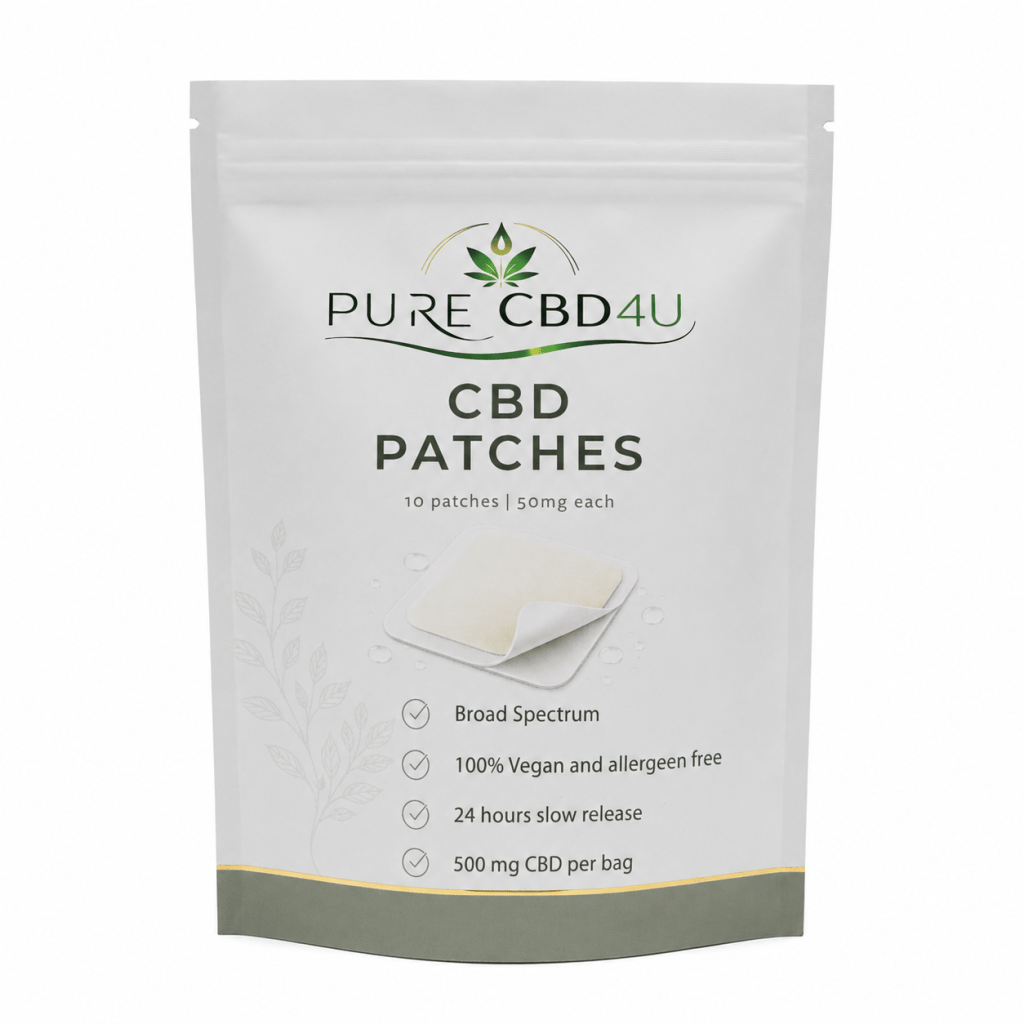
50mg CBD + CBG per patch. Slow release. Third-party tested. If you want targeted relief in one specific spot rather than a full-body effect, CBD patches are usually the answer. PureCBD4U's CBD transdermal patches stick directly to the skin and release a steady dose over 24 hours, so you're not reapplying cream every couple of hours or swallowing anything at all. Each patch combines CBD and CBG for a more complete cannabinoid profile, delivered exactly where you need it.
CBD patches are small adhesive patches, similar in concept to nicotine patches, that stick to the skin and slowly release CBD and other cannabinoids into the body over time. Instead of swallowing a capsule or measuring drops of CBD oil, you simply apply one to clean, dry skin and let it work in the background for hours, delivering CBD continuously rather than all at once. Most transdermal patches use a slow-release design, meaning the patch holds a small reservoir of cannabinoids and lets them through gradually rather than all at once. Many CBD patches on the market today are built this way, and PureCBD4U’s CBD transdermal patches follow the same principle: 50mg of combined CBD and CBG per patch, designed for targeted application rather than the broad, full-body feel you get from an oil or capsule. People sometimes also call them a CBD pain patch, since pain relief is the single most common reason for reaching for one.
CBD transdermal patches work through transdermal delivery: the cannabinoids absorb through the skin’s outer layer and enter the bloodstream directly, bypassing the digestive system entirely. This is the key difference between transdermal patches and oral CBD products like capsules or gummies, which have to pass through your stomach and liver before CBD enters the bloodstream. Because the digestive system is bypassed, less CBD gets broken down before it can act, which is part of why transdermal cannabidiol is often associated with higher bioavailability compared to swallowing it outright. Researchers studying skin permeability sometimes use lab equipment called Franz cells to measure exactly how much of a compound passes through skin. This kind of testing is part of how a reliable quantitative method for determining CBD content gets established, rather than brands just guessing. Once CBD and CBG cross into the blood vessels just beneath the skin, they interact with the body’s endocannabinoid system, a network of cannabinoid receptors involved in mood, pain signaling, and inflammation, and interact with these receptors gently, which is part of why these patches work gradually rather than all at once. Compared to nasal and transdermal application methods studied in early cannabinoid research, skin-based delivery through patches turned out to be one of the more practical, consistent options.
Compared to oral administration, transdermal delivery skips the digestive system and the liver almost entirely, so the release of CBD into the bloodstream stays steadier over many hours instead of spiking and fading. Compared to other topical methods like creams or balms, a patch keeps delivering CBD directly to the skin continuously instead of needing frequent reapplication, since the active ingredients sit in a small reservoir against the skin rather than being absorbed once and rubbed away. This is also why so many CBD patches are marketed for chronic, ongoing discomfort rather than a single flare-up.
CBD patches are a wellness product, not medicine, so we’d rather be upfront about what current evidence and user experience support than oversell it.
The most common reason people reach for a CBD pain patch is for localized pain relief in one specific spot, such as joint pain, muscle pain, sore muscles, muscle aches after activity, or general joint discomfort. Because the patch sits directly over the sore spot, the release of CBD stays concentrated where you need it rather than spreading out evenly the way an oral product does, which is exactly the kind of targeted relief most people are looking for. Many customers use transdermal patches as part of a broader pain management routine and general pain reduction strategy for nerve pain and chronic pain alike, since both nerve pain and chronic pain tend to respond better to steady, localized exposure from these kinds of patches than to a single short-acting dose meant to relieve pain just once. Some early research has also looked at whether transdermal cannabidiol reduces inflammation locally at the application site, alongside any direct effect on pain related behaviours in lab settings; together, this is part of the basis for thinking CBD transdermal patches may help reduce inflammation and reduce pain at the same time, though more clinical data in humans is still needed before drawing firm conclusions. CBD’s anti inflammatory properties are often cited as one reason topical and transdermal CBD patches are popular for pain and inflammation together, rather than treating pain alone as a separate issue.
Because a patch slowly releases CBD over roughly 24 hours, you get long lasting relief without having to remember multiple doses throughout the day. This steady, slow release of CBD is part of why many customers prefer transdermal patches over taking CBD several times in a single day just to maintain a consistent level in the body.
Beyond targeted relief, some customers use CBD patches to support a general sense of calm and overall wellness throughout the day, since a steady release may help support mood and stress response via the same endocannabinoid system involved in pain regulation. These are reported, individual experiences with using CBD this way, not guarantees, and CBD patches are not intended to diagnose, treat, or cure any disease.
This is one of the most common questions we hear, and the honest answer depends on what you actually want from your CBD products:
| CBD Patches | CBD Oil | Capsules / Gummies | |
| Best for | Targeted, localized relief | Full-body effect, flexible dosing | Convenience, precise dosing |
| Delivery | Transdermal, through the skin | Under the tongue | Through the digestive system |
| Duration | Up to 24 hours | A few short hours | Several hours |
| Reapplication | Once a day | As needed | Once or twice a day |
If you want support in one specific area, a patch makes sense as a more natural solution than swallowing something for a localized problem. If you want a full-body effect or flexible dosing, CBD oil is a better fit. If you want convenience above all, capsules or gummies are worth a look. Plenty of customers actually combine more than one of these natural solutions depending on the day.
Using a CBD patch is straightforward, but a few small details make a real difference to how well it performs:
Most people only need one of these patches at a time, though using more than one in different locations can make sense if you’re managing more than one area of discomfort at once.
For general wellness or calm, many people apply a patch to the upper arm, since this vein-rich, low-hair area can support more consistent absorption. For targeted relief, applying the patch directly over or near the affected area, such as a sore joint or tight muscle, tends to work better than a general location, since localized pain relief comes from proximity as much as absorption.
Not every CBD patch on the market is made with the same care, and quality differences usually show up in testing, not marketing copy. Every batch of PureCBD4U’s CBD patches is third-party tested, with results available by scanning the QR code on the packaging, so you can verify the actual cannabinoid content rather than just trust the label. There’s no single industry-wide standard that every brand uses to test patches consistently, which is exactly why third-party lab verification matters so much in this category. A bottle of patches that claims a certain dose but hasn’t been independently tested leaves you guessing about its real cannabinoid content, and that’s not a guess we think customers should have to make. When you’re comparing CBD transdermal patches across different brands, taking CBD seriously also means checking that each one is built to slowly release CBD at a verified rate, not just a vague claim that it does.
CBD patches are generally well tolerated, but it’s worth knowing what to expect. The most common issue is mild skin irritation at the patch site, sometimes with redness or itching, particularly for people with sensitive skin or skin allergies. If irritation develops, remove the patch and try a different application site, or stop use and speak with a doctor if symptoms don’t resolve within a few hours. CBD can interact with certain medications, so check with a healthcare professional before adding CBD patches to your routine if you take prescription medicine. Adverse reactions are uncommon but can include swelling or a stronger allergic response in people with existing skin sensitivities; discontinue use right away if that happens. As with any CBD product, talk to a healthcare professional or other medical professional first if you’re pregnant, breastfeeding, or managing a diagnosed health condition. People taking blood thinners or other prescription medications should be especially cautious, since CBD interacts with the same liver pathways used to process many medications.
Generally yes, with the details depending on where you live. In the EU and UK, hemp-derived CBD patches are legal as long as THC content stays within local legal limits. Regulations around CBD continue to evolve, so it’s worth checking your own country’s current rules, especially if you’re traveling. In the United States, hemp-derived CBD became federally legal once hemp was separated from the legal definition of marijuana, provided THC stays under 0.3%. Rules can still vary by region, so always check local regulations before ordering from outside your home country.
PureCBD4U was built around a simple idea: CBD products should be exactly what the label says, backed by real testing rather than marketing claims. Our CBD transdermal patches combine CBD and CBG specifically because we believe in giving you a more complete cannabinoid profile, not a single isolated, pure CBD compound stretched as far as it’ll go. Every patch is designed for targeted application and a slow, steady release, so you get consistent support without thinking about it more than once a day. We keep things transparent: a clear ingredient list, a verified 50mg dose of combined cannabinoids per patch, and lab results you can actually check. That’s the standard we hold ourselves to across our CBD patches, oil, capsules, and everything else we sell. Whether you’re using CBD transdermal patches for pain and inflammation, or simply using CBD patches as part of a daily comfort routine, the goal is always the same: real cannabinoids that reduce pain and support recovery, released steadily, in patches you can trust.
These are adhesive transdermal patches that stick to the skin and slowly release cannabinoids into the bloodstream over time. PureCBD4U’s CBD patches combine CBD and CBG for targeted, long-lasting support.
CBD transdermal patches work by absorbing cannabinoids directly through the skin and into the bloodstream, bypassing the digestive system entirely. This is also exactly how transdermal CBD patches work for many other topical methods of delivery, and it’s the same basic pain management mechanism behind most patches on the market.
Most people notice initial effects within a few hours, since transdermal absorption is slower to start than other methods, but the release continues steadily for up to 24 hours.
Clean, dry skin with minimal hair works best, ideally directly over the affected area for targeted pain relief. Rotate the site occasionally if you use CBD patches typically every day.
Most people only need one patch at a time, but using more than one in different locations may be appropriate if you’re managing more than one area of discomfort. Talk to a healthcare professional if you’re unsure.
Neither is objectively better. CBD patches offer targeted, long-lasting relief in one area, while CBD oil offers a faster, full-body effect with flexible dosing. Many people use both depending on the situation.
CBD patches typically contain little to no THC, but trace amounts could theoretically appear on a sensitive drug test with frequent use. Ask about THC content directly if this is a concern.
Yes, hemp-derived CBD patches are legal across the EU and UK as long as THC stays within legal limits, and in the US under federal law, though rules vary by region.
The most common side effect is mild skin irritation at the application site. CBD can also interact with certain medications, so check with your doctor if you’re on prescription medicine.
Every batch is third-party tested, with lab results available via QR code on the packaging, confirming the actual cannabinoid content rather than relying on the label alone.
If you want targeted, long-lasting relief without pills, drops, or constant reapplication, our CBD patches are built exactly for that. 50mg of combined CBD and CBG per patch, third-party tested, and simple enough to apply once and forget about for the rest of the day. Shop PureCBD4U’s CBD transdermal patches today and find a more targeted way to apply it.
Written by Carmen Dos Anjos Germano, Founder of Pure CBD4U
Carmen founded Pure CBD4U after her own search for reliable, high-quality CBD oil, starting with full spectrum CBD oil 5% as part of her personal wellness routine. That experience shaped the company’s focus on transparency, quality and independent testing. Pure CBD4U works with EU-grown hemp, uses third-party laboratory testing, and makes batch results accessible through QR codes on its products. Carmen remains closely involved in product selection, quality standards and the development of the Pure CBD4U range.


