
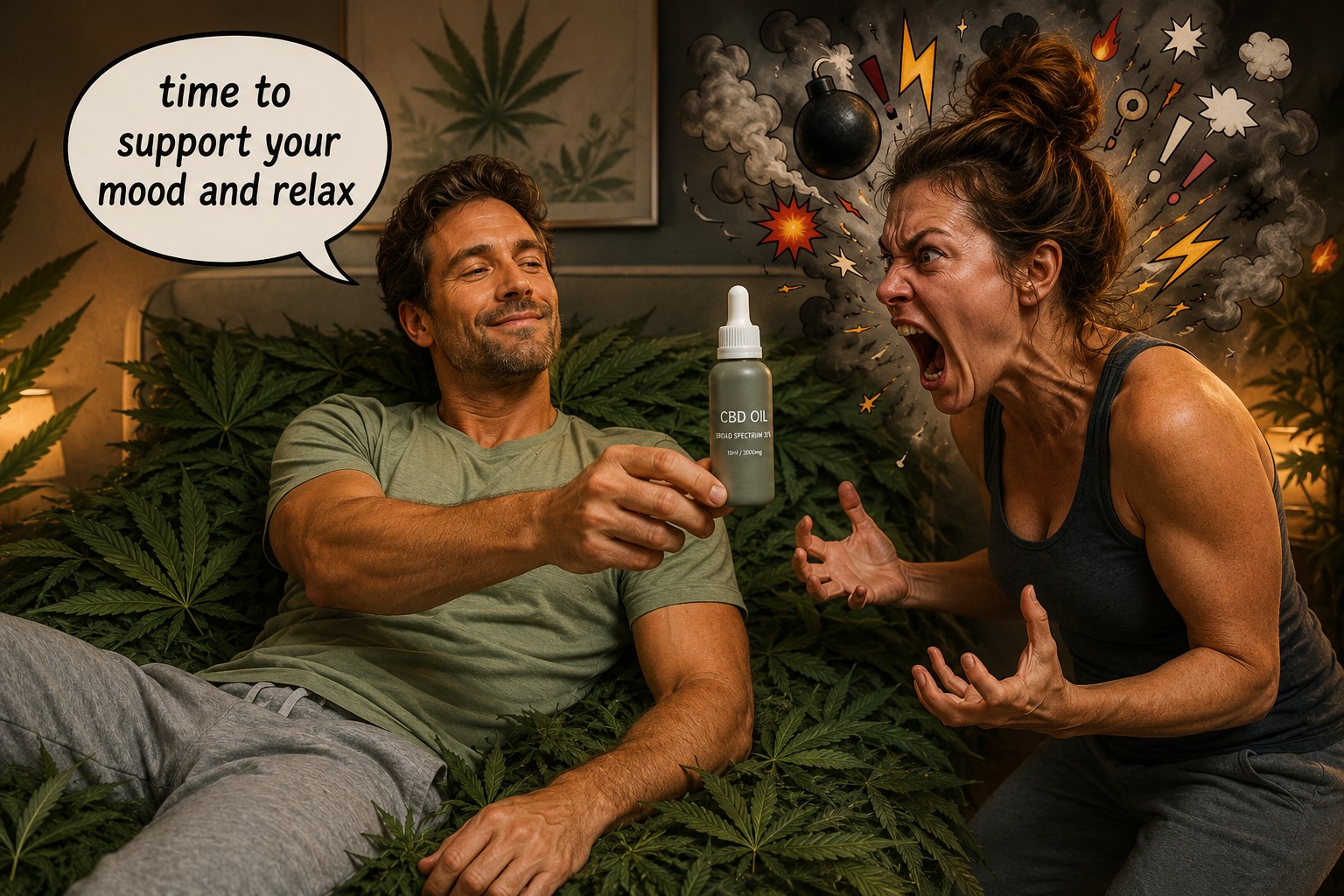
It’s 3pm on a Tuesday. Nothing catastrophic has happened. Your day has been, by any reasonable measure, fine. And yet somewhere between the fourth video call and the accumulated small frictions of ordinary life, you feel a particular kind of emotional flatness — a low-grade heaviness that makes simple tasks feel harder than they should, and patience thinner than you’d like.
Most people know this feeling. It doesn’t qualify as a crisis. It’s not depression. It’s the ordinary, sometimes relentless attrition of modern life on emotional reserves — and the quiet recognition that maintaining a steady mood takes more active support than people often realise.
Why Mood Is Harder to Maintain Than It Looks
Emotional balance isn’t a fixed state. It fluctuates constantly, shaped by sleep quality, blood sugar levels, the quality of your relationships, how much time you’ve spent outside, whether you’ve had enough to drink, and a hundred other variables operating mostly below conscious awareness. Good mood isn’t simply the absence of bad news; it’s the product of a complex internal ecosystem functioning well.
The challenge modern life presents is less about isolated bad events — those, paradoxically, the human mind handles quite well — and more about the cumulative weight of chronic low-level demand. Constant connectivity, fragmented attention, the disappearance of genuine downtime, irregular sleep. Each of these chips away at emotional resilience in ways that are too small to notice in isolation but add up to a significant drain over days and weeks.
This is why so many people find themselves reaching for everyday habits that help anchor their mood: exercise, time in nature, regular sleep, meaningful social contact. Not because any of these is a quick fix, but because mood responds to consistent inputs. It’s cultivated, not simply experienced.
CBD oil for mood support, CBD for mood balance, and CBD and mood research have all become part of that conversation, and it’s worth understanding what they might genuinely offer — and what they can’t.
How CBD May Influence Emotional Balance
The endocannabinoid system has a documented role in mood regulation. Receptors in this system are found in areas of the brain associated with emotional processing, and the system appears to interact with pathways relevant to stress response, reward signalling, and emotional resilience. CBD, which interacts with the endocannabinoid system and several other receptor pathways, has attracted research interest in this area for these reasons.
Current evidence suggests CBD may influence serotonin-related pathways, which have their own well-established connections to mood regulation. Several human studies have found CBD associated with reduced anxiety and improved emotional tone in controlled settings — though it’s important to be precise about what this means. These studies don’t establish CBD as a treatment for depression or mood disorders. What they suggest, more modestly, is that CBD interacts with systems relevant to how we process and regulate everyday emotional experience.
CBD calm mood support, in practice, tends to be quiet and cumulative. What CBD oil for mood support actually delivers for many regular users is a steadier baseline rather than a mood lift — feeling less reactive to irritants, more able to access calm under mild pressure, less likely to be undone by the small frustrations that accumulate over the course of an ordinary day. That’s a meaningful benefit, even if it’s not dramatic.
> *”It’s not that CBD makes you feel happy. It’s more that the things that would normally chip away at you seem to have less purchase.”*
Building the Habits That Actually Support Mood
CBD oil for mood support makes the most sense when it sits alongside the other inputs that genuinely move the needle on emotional wellbeing — and it’s worth naming those clearly, because they tend to matter more.
Sleep is probably the single most powerful lever for everyday mood. Even mild sleep deprivation reliably reduces emotional resilience, increases irritability, and narrows the psychological bandwidth available for dealing with difficulty. If mood is a recurring concern and sleep is poor, that’s the first thing worth addressing. Our article on the best time to take CBD oil explores how CBD timing might support a better sleep-adjacent routine.
Movement has consistent, well-supported evidence for mood effects. It doesn’t require intensity — regular moderate movement, particularly in daylight, has meaningful impacts on emotional tone over time. Social connection, even brief and low-key, tends to lift mood in ways that solitary activities rarely replicate. Nutrition has a more complex relationship with mood than is sometimes acknowledged, but blood sugar stability in particular plays a role most people underestimate.
These aren’t competitors to CBD — they’re the same ecosystem. CBD for positive mood works best as one element in a lifestyle that supports the conditions in which good mood is more naturally available.
What CBD for Everyday Mood Can Realistically Offer
Mood support CBD isn’t going to change your personality or produce artificial cheerfulness. It doesn’t work like an antidepressant and should never be considered a substitute for one. This isn’t a legal disclaimer — it’s an accurate description of what the biology suggests and what consistent users actually report.
What cannabidiol mood support may genuinely offer is a degree of emotional steadiness — a slight reduction in the reactivity and irritability that accumulates under sustained low-level pressure. For people whose everyday mood is generally fine but could use a little more buffering against the ordinary wear of modern life, that’s a realistic and worthwhile goal.
If you’re curious what taking CBD actually feels like from a subjective standpoint, our article on what does CBD feel like addresses this directly and is worth reading before you start. And if your concern is more specifically about stress — the activation, the physical tension, the anxious edge — the CBD oil for stress article explores that more targeted application in depth.
For spectrum type, both full spectrum and broad spectrum CBD are commonly chosen for mood-related purposes. Some users find the fuller cannabinoid and terpene profile of full spectrum slightly more effective for emotional balance; others prefer the THC-free option of broad spectrum. The CBD vs CBG vs CBN comparison is also relevant if you’re curious whether other cannabinoids might complement a mood-support routine — CBG in particular has attracted interest in this context.
A Few Honest Notes
CBD oil for mood support, however consistent, shouldn’t replace professional support for significant emotional difficulties. If low mood is persistent, severe, or affecting your ability to function, speaking with a GP or mental health professional is the appropriate first step — and a good one. CBD is a wellness supplement, and there’s no scenario in which it’s a substitute for genuine mental health care.
For generally healthy adults navigating ordinary emotional ups and downs — the background tiredness, the afternoon flatness, the slightly-shorter-fuse that comes with a demanding life — CBD mental wellness support represents one reasonable addition to a thoughtful daily routine. Not a cure. Not a transformation. But a quiet, consistent piece of a larger picture.
The CBD side effects guide and CBD dosage guide are worth reading before you start, and the CBD oil for daily wellness article explains how CBD might fit into a broader ongoing routine.
Frequently Asked Questions
Can CBD improve your mood?
Current research suggests CBD may interact with serotonin-related and endocannabinoid pathways involved in mood regulation. Many regular users describe a steadier emotional baseline — less reactive, more able to access calm — rather than a mood lift. It’s not a treatment for depression or mood disorders.
How does CBD affect mood?
CBD appears to interact with receptors involved in emotional processing and stress response, including pathways linked to serotonin activity. The exact mechanisms are still being studied. In practice, CBD emotional balance support tends to be subtle and cumulative rather than immediately obvious.
Is CBD good for everyday mood support?
For adults experiencing ordinary emotional fluctuations — mild irritability, low-grade fatigue, difficulty maintaining calm under routine pressure — CBD wellbeing support may help as part of a broader lifestyle routine that includes sleep, movement, and social connection.
Does CBD change your personality?
No. CBD is non-intoxicating and doesn’t alter personality. What many users describe is feeling more like their usual self on a good day — calmer, less reactive, more emotionally available — rather than a fundamentally different version of themselves.
How long does CBD take to affect mood?
As with most wellness applications, CBD for everyday mood tends to be more noticeable after consistent daily use over several weeks than from a single dose. Many people find the cumulative effect becomes clearer over time.
Can CBD replace therapy or antidepressants?
No. CBD is a wellness supplement and should not be used in place of professional mental health support. If you’re experiencing persistent or significant low mood, speaking with a healthcare professional is the right first step.
Related reading: CBD Oil for Relaxation
Written by Carmen Dos Anjos Germano, Founder of Pure CBD4U
Carmen founded Pure CBD4U after her own search for reliable, high-quality CBD oil, starting with full spectrum CBD oil 5% as part of her personal wellness routine. That experience shaped the company’s focus on transparency, quality and independent testing. Pure CBD4U works with EU-grown hemp, uses third-party laboratory testing, and makes batch results accessible through QR codes on its products. Carmen remains closely involved in product selection, quality standards and the development of the Pure CBD4U range.

Leave a Reply