Everything You Need to Know Before Choosing CBD for Everyday Stress
Stress is something we all experience.
Sometimes it’s obvious—a demanding job, financial pressure, family responsibilities, or an important deadline. Other times it builds so gradually that we hardly notice it until it begins affecting our sleep, mood, concentration, or overall wellbeing.
Modern life rarely gives us a chance to completely switch off. Emails arrive long after the workday has ended, phones constantly demand our attention, and many people feel like they’re living in a permanent state of “always on.” It’s no surprise that more people than ever are looking for natural ways to support relaxation and emotional balance.
One product that has received enormous attention over the past few years is CBD oil.
Searches for terms like “CBD oil for stress,” “best CBD oil for stress,” “does CBD oil help with stress,” and “how much CBD oil should I take for stress” continue to grow every month as more people become interested in hemp-derived wellness products.
But does CBD really work?
Can CBD oil actually help you feel calmer, or is it simply another wellness trend surrounded by clever marketing?
The honest answer lies somewhere in the middle.
Current research is promising, but it’s also evolving. Scientists continue to study how CBD interacts with the body’s natural regulatory systems, while millions of people worldwide already include CBD oil as part of their daily wellness routine. Although individual experiences differ, one thing is clear: interest in CBD has grown because many users feel it helps support a greater sense of balance during periods of everyday stress.
In this guide, we’ll take an honest, evidence-based look at CBD oil for stress. You’ll learn how CBD works inside the body, what current clinical studies actually show, how to choose the right CBD product, what dosage beginners should consider, possible side effects, and how to identify high-quality CBD oil that deserves your trust.
Whether you’re completely new to CBD or comparing different CBD products before making your first purchase, this guide is designed to help you make an informed decision.
Understanding Stress: Why It Affects More Than Your Mood
Most people think of stress as something that simply happens in the mind.
In reality, stress affects almost every system in the body.
When your brain detects a challenge or potential threat, it immediately activates what scientists call the fight-or-flight response. This is an automatic survival mechanism that has protected humans for thousands of years.
During this response, your body releases hormones such as adrenaline and cortisol.
Your heart beats faster.
Your breathing becomes quicker.
Your muscles prepare for action.
Your brain becomes more alert.
In the short term, this response is incredibly useful. It helps you react quickly during difficult situations, improve focus and solve immediate problems.
The challenge isn’t stress itself.
The challenge is chronic stress.
Unlike our ancestors, most of us aren’t escaping dangerous predators. Instead, we’re exposed to smaller but constant sources of pressure:
- demanding work schedules
- financial concerns
- family responsibilities
- poor sleep
- information overload
- social media
- lack of downtime
When these pressures continue day after day, the body may struggle to return to its natural state of balance.
Over time, prolonged stress may contribute to:
- difficulty relaxing
- reduced concentration
- restless sleep
- irritability
- muscle tension
- fatigue
- reduced emotional resilience
- lower overall wellbeing
This is one reason why healthcare professionals increasingly recommend taking a comprehensive approach to stress management instead of relying on one single solution.
Exercise, balanced nutrition, quality sleep, mindfulness, therapy when appropriate, and healthy daily routines all play important roles in supporting mental health and physical wellbeing.
Many people now include CBD oil as another piece of that broader wellness strategy.
What Is CBD Oil?
CBD oil is one of the most widely used hemp-derived wellness products available today.
CBD stands for cannabidiol, a naturally occurring compound extracted from the hemp plant. It belongs to a family of plant compounds known as cannabinoids.
Unlike THC (tetrahydrocannabinol), CBD does not produce intoxication or the “high” commonly associated with marijuana.
That’s one of the main reasons CBD has become so popular among people looking for everyday support rather than recreational effects.
Most CBD oils combine concentrated hemp extract with a carrier oil such as MCT oil, making the cannabinoids easier for the body to absorb.
When used correctly, CBD oil is typically taken under the tongue, where it remains for around 60 to 90 seconds before swallowing. This method, known as sublingual administration, allows part of the CBD to be absorbed directly through the tissues beneath the tongue, resulting in faster absorption than many edible CBD products.
Although CBD oil remains the most popular format, it’s far from the only option.
Today, consumers can choose from several different CBD products, including:
- CBD oil
- CBD capsules
- CBD gummies
- CBD softgels
- CBD creams and balms
- CBD patches
Each format has its own advantages.
CBD gummies are convenient and easy to take while travelling.
Capsules offer consistent, pre-measured servings.
Topical CBD creams are commonly chosen for localized application.
CBD oil, however, continues to be the preferred option for people looking for flexible dosing and relatively fast absorption, making it especially popular among those seeking support during periods of everyday stress.
Why Are So Many People Using CBD for Stress?
Only a few years ago, relatively few people had heard of CBD.
Today, millions of adults across Europe and North America include CBD in their daily wellness routines.
Why has interest grown so quickly?
Part of the answer lies in changing attitudes toward wellness.
Many people are no longer looking for products that simply cover up symptoms. Instead, they’re interested in supporting the body’s natural ability to maintain balance.
Large consumer surveys consistently show that stress and anxiety are among the most common reasons people purchase CBD products.
Users often report choosing CBD because they hope to support:
- everyday calm
- emotional balance
- relaxation
- healthy sleep
- overall wellbeing
It’s important to understand what these surveys actually tell us.
They don’t prove that CBD works.
Instead, they demonstrate why researchers have become increasingly interested in studying CBD through clinical trials and human research.
The growing demand for CBD isn’t based solely on marketing.
It’s based on millions of consumers asking the same question:
“Could CBD help me cope better with everyday stress?”
That question has led scientists to investigate CBD more closely than ever before.
How Does CBD Work Inside the Body?
One of the biggest misconceptions about CBD is that researchers fully understand exactly how it works.
They don’t.
What they do know is fascinating.
Rather than acting on a single pathway, CBD appears to influence several biological systems involved in maintaining balance, also known as homeostasis.
The most important of these is the endocannabinoid system (ECS).
Although many people have never heard of it, the ECS plays a vital role in helping the body regulate numerous everyday functions.
Scientists believe this system helps maintain balance across processes including:
- mood
- stress response
- sleep
- memory
- appetite
- immune function
- discomfort perception
Instead of acting like an “on” or “off” switch, the endocannabinoid system works more like a thermostat.
Its job is to help the body remain balanced despite constantly changing internal and external conditions.
Unlike THC, CBD does not strongly bind to the body’s cannabinoid receptors.
Instead, researchers believe CBD works more indirectly by influencing how the body’s own naturally produced endocannabinoids function while also interacting with several other biological pathways involved in stress, mood and relaxation.
This indirect mechanism is one reason CBD produces a very different experience from THC.
Most people don’t describe feeling intoxicated or dramatically different.
Instead, those who respond well to CBD often describe something much more subtle:
They simply feel more like themselves.
Calmer.
More balanced.
Better able to deal with the normal pressures of everyday life.
What Does the Research Say About CBD Oil for Stress?
If you’ve spent any time researching CBD oil for stress, you’ve probably come across two very different opinions.
One side claims CBD is a miracle solution for almost everything.
The other argues there’s not enough evidence to support its use.
As is often the case, the truth lies somewhere in between.
Over the last decade, interest in CBD has grown enormously, and so has scientific research. Universities and research institutions around the world continue to investigate how CBD interacts with the human body, particularly in relation to stress, anxiety, sleep, mood and overall mental health.
Although researchers agree that larger clinical trials are still needed, the current evidence is becoming increasingly encouraging.
Rather than asking whether CBD “works” in a simple yes-or-no way, scientists are now trying to understand how CBD may support the body’s natural response to stress.
That difference is important.
CBD isn’t believed to force relaxation.
Instead, current research suggests it may help support several biological systems involved in maintaining emotional balance.
CBD, Stress and Anxiety: Understanding the Difference
People often use the words stress and anxiety interchangeably, but they aren’t exactly the same.
Stress usually develops because of something happening around you.
Perhaps you’re facing an important presentation at work.
Maybe you’re dealing with financial concerns, relationship problems, family responsibilities or a busy schedule that leaves very little time to recover.
In many cases, once the stressful event passes, the feeling gradually disappears.
Anxiety is different.
It can continue even when there’s no immediate cause.
Someone may still experience racing thoughts, nervousness or excessive worrying long after the original stressful situation has ended.
Although this article focuses on CBD oil for stress, you’ll often see anxiety mentioned throughout scientific literature because the two conditions frequently overlap.
Many of the published clinical studies involve participants experiencing anxiety-related symptoms, making the findings relevant to both topics.
Why Scientists Are Interested in CBD
The human body already has sophisticated systems designed to help regulate stress.
Researchers believe CBD may influence several of these systems simultaneously.
Instead of acting on one single receptor, CBD appears to interact with multiple signalling pathways involved in mood, emotional regulation and relaxation.
This broad interaction is one reason scientists continue to study CBD so extensively.
Current research is exploring whether CBD may help support:
- emotional wellbeing
- relaxation
- healthy sleep patterns
- stress resilience
- overall mental balance
It’s important to remember that research is ongoing.
Scientists are careful not to describe CBD as a cure or treatment for stress.
Instead, they investigate whether CBD may become a useful component of a wider wellness approach alongside healthy lifestyle habits.
CBD, Serotonin and Emotional Balance
One of the most frequently discussed areas of CBD research involves serotonin.
Serotonin is a neurotransmitter that plays a major role in regulating mood, emotional wellbeing and how we respond to stressful situations.
When people talk about feeling emotionally balanced or mentally resilient, serotonin is often part of that conversation.
Researchers believe CBD may interact with 5-HT1A serotonin receptors, which are involved in emotional processing and stress regulation.
Although scientists are still working to fully understand this relationship, early findings suggest this interaction may help explain why many CBD users report feeling calmer during periods of everyday stress.
Unlike some medications that directly target serotonin levels, CBD appears to work much more indirectly.
Rather than dramatically changing brain chemistry, researchers believe CBD may support the body’s own natural regulatory systems.
This may explain why many people describe the effects of CBD as subtle and gradual instead of immediate or overwhelming.
The Connection Between CBD and Cortisol
Another important area of research focuses on cortisol.
Often called the stress hormone, cortisol is produced naturally by the body and plays an essential role in daily health.
It helps regulate:
- energy levels
- metabolism
- blood sugar
- immune function
- the body’s response to stress
Cortisol itself isn’t harmful.
In fact, we couldn’t survive without it.
The problem occurs when cortisol remains elevated for long periods because the body is constantly responding to ongoing psychological stress.
Researchers are now investigating whether CBD may help support a healthier stress response by influencing systems involved in cortisol regulation.
Although larger human studies are still needed, early evidence suggests CBD may contribute to maintaining a more balanced physiological response during stressful situations.
This is one reason why CBD oil for everyday stress continues to receive so much scientific attention.
Can CBD Help You Feel Calmer?
Perhaps the most common question isn’t about serotonin or cortisol.
It’s much simpler.
“Will I actually feel calmer if I use CBD oil?”
The honest answer is:
Possibly—but everyone’s experience is different.
Some people notice subtle changes within the first week.
Others only begin noticing benefits after several weeks of consistent daily use.
Interestingly, many experienced CBD users don’t describe the feeling as something dramatic.
Instead, they often explain it differently.
Rather than saying they “feel CBD,” they describe noticing:
- fewer racing thoughts
- an easier time relaxing after work
- greater emotional balance
- feeling less overwhelmed by everyday challenges
- finding it easier to unwind before bedtime
These experiences remain personal observations rather than guaranteed outcomes.
Factors such as body weight, metabolism, stress levels, lifestyle, dosage and product quality can all influence individual results.
That’s why comparing your experience with someone else’s isn’t always helpful.
CBD and Sleep: Why the Two Are Closely Connected
Stress and sleep influence each other more than many people realise.
When stress levels increase, sleep often suffers.
When sleep quality decreases, everyday stress usually feels even harder to manage.
This cycle can quickly become frustrating.
Many people who search for best CBD oil for stress are also hoping to improve their sleep.
Current research suggests CBD may support healthier sleep patterns for some individuals, particularly when stress is one of the factors affecting sleep quality.
Rather than acting as a traditional sleeping aid, CBD appears more likely to support the biological systems involved in relaxation.
For some people, feeling calmer during the evening naturally makes it easier to fall asleep.
Others report sleeping more consistently throughout the night.
Scientists continue studying exactly how CBD influences sleep, but they generally agree that supporting relaxation may indirectly contribute to better rest.
Is There Enough Scientific Evidence?
This is one of the most important questions any responsible guide should answer.
The answer is encouraging—but realistic.
Today’s evidence is much stronger than it was ten years ago.
Researchers have published numerous clinical studies, observational surveys and systematic reviews exploring CBD’s potential role in supporting stress, anxiety and emotional wellbeing.
However, scientists also agree on something else.
More large-scale, long-term human studies are still needed.
That doesn’t mean CBD doesn’t work.
It simply means research continues to evolve.
Responsible CBD education should acknowledge both what researchers already know and what they’re still trying to understand.
That’s exactly why choosing trustworthy information matters just as much as choosing a trustworthy CBD product.
The strongest claims aren’t always the most accurate.
The companies that inspire the most confidence are usually those that allow the science to speak for itself rather than making promises that current evidence cannot fully support.
How Much CBD Oil Should You Take for Stress?
One of the most frequently searched questions online is:
“How much CBD oil should I take for stress?”
Unfortunately, there isn’t a single dosage that works for everyone.
Unlike many traditional medications, CBD is highly individual. Two people of the same age and weight can take exactly the same amount and have completely different experiences.
That’s because your ideal CBD dosage depends on several factors, including:
- your body weight
- your metabolism
- your daily stress levels
- the strength of the CBD oil
- your previous experience with CBD
- your individual sensitivity to cannabinoids
For this reason, most CBD experts recommend starting with a low amount and gradually increasing it over time rather than taking a large serving immediately.
Patience usually produces better results than rushing the process.
A Practical CBD Dosage Guide for Beginners
If you’re completely new to CBD, it’s generally recommended to begin with a relatively low daily amount.
For many adults, a starting dosage of around 10 to 20mg of CBD per day is a sensible place to begin.
Use that amount consistently for several days while paying attention to how your body responds.
If needed, you can gradually increase the dosage until you find what feels right for you.
Many experienced CBD users eventually settle somewhere between 20 and 50mg per day, although some people prefer less and others choose more.
The goal isn’t to take the highest possible dosage.
The goal is to find your minimum effective dose—the smallest amount that fits your individual needs.
Taking significantly more CBD doesn’t necessarily produce better results.
In many cases, consistency matters far more than quantity.
Choosing the Right CBD Product for Stress
If you’re new to CBD, one of the first things you’ll notice is the huge variety of products available. From CBD oil and gummies to capsules, patches and topical creams, each product offers a slightly different experience.
The best choice depends on your lifestyle, personal preferences and wellness goals rather than one format being universally better than another.
CBD Oil
CBD oil remains the most popular choice for people looking to support everyday stress and emotional balance.
Taken under the tongue, it is absorbed relatively quickly and allows you to adjust your serving with precision. This flexibility makes CBD oil an excellent option for beginners who want to gradually find the amount that works best for them.
CBD Gummies
CBD gummies are ideal for people who value convenience.
Each gummy contains a pre-measured amount of CBD, making it easy to maintain a consistent daily routine. They’re also discreet, easy to carry and don’t require measuring drops, making them a popular choice for work, travel and busy lifestyles.
CBD Capsules and Softgels
Capsules and softgels provide the same convenience as gummies while offering a tasteless alternative.
Many people prefer capsules because they fit naturally into an existing supplement routine and deliver a consistent serving every time.
CBD Creams and Topicals
Although topical CBD products are commonly used for localized application to muscles and joints, they are generally not the first choice for people specifically looking to support stress or emotional wellbeing.
Because they’re applied directly to the skin rather than absorbed systemically like CBD oil or capsules, they serve a different purpose.
Which CBD Product Is Best for Stress?
For most people, CBD oil remains the preferred option because it combines flexible dosing with relatively fast absorption.
However, if convenience is your highest priority, CBD gummies or capsules may fit your lifestyle better.
Ultimately, the best CBD product is the one you can use consistently. A high-quality CBD product taken every day is generally more valuable than choosing a format that doesn’t fit naturally into your routine.
Choosing the Right CBD Strength
Another point that often causes confusion is CBD concentration.
Two bottles may look almost identical while containing completely different amounts of CBD.
For example:
- A 5% CBD oil contains much less CBD per drop than a 20% CBD oil.
- A 30% CBD oil delivers considerably more CBD with each serving than a 10% oil.
This doesn’t mean higher concentrations are automatically stronger in terms of effectiveness.
They simply allow you to reach your preferred daily dosage using fewer drops.
Many beginners actually find lower concentrations easier because they allow for more gradual adjustments.
As your experience grows, you may decide that a higher-strength CBD oil better suits your routine.
Full Spectrum or Broad Spectrum CBD for Stress?
Another question we hear regularly is:
“Which type of CBD oil is best for stress?”
The answer depends on your personal preferences and lifestyle.
Full Spectrum CBD Oil
Full Spectrum CBD contains a wide range of naturally occurring hemp compounds, including:
- CBD
- minor cannabinoids
- terpenes
- flavonoids
- legally permitted trace amounts of THC
Many people choose Full Spectrum CBD because of the entourage effect—the theory that cannabinoids and terpenes may work more effectively together than in isolation.
Broad Spectrum CBD Oil
Broad Spectrum CBD also contains multiple cannabinoids and naturally occurring terpenes.
The key difference is that the THC has been removed.
This makes Broad Spectrum CBD particularly attractive for people who:
- prefer THC-free products
- undergo workplace drug testing
- simply feel more comfortable avoiding THC altogether
Both options are excellent choices.
The right one depends on your personal priorities rather than one being universally better than the other.
Why Product Quality Matters More Than Most People Realise
One of the biggest mistakes consumers make is assuming that every CBD oil on the market offers the same quality.
Unfortunately, that’s far from the truth.
As CBD has become more popular, thousands of new brands have entered the market. While many produce excellent products, others provide very little information about what’s actually inside the bottle.
Several clinical studies have shown that some over-the-counter CBD products contain significantly different CBD concentrations than their labels claim.
In some cases, products have even been found to contain unexpected levels of THC or unwanted contaminants.
This is why choosing a reputable manufacturer is just as important as choosing the right dosage.
What Should You Look for Before Buying CBD Oil?
Whether you’re purchasing CBD for stress, sleep or general wellness, there are several indicators of a high-quality product.
Independent Third-Party Testing
Every reputable CBD company should provide an up-to-date Certificate of Analysis (COA) from an independent laboratory.
A COA confirms important details such as:
- CBD potency
- cannabinoid profile
- THC content
- heavy metals
- pesticides
- residual solvents
- microbiological safety
If these reports aren’t available, it’s reasonable to ask why.
Transparency is one of the strongest indicators of product quality.
Premium Hemp
High-quality CBD starts with the hemp plant itself.
The best manufacturers use carefully cultivated hemp grown under strict agricultural standards, helping ensure cleaner and more consistent extracts.
Clean Extraction Methods
Many premium brands use supercritical CO₂ extraction, a method that preserves valuable cannabinoids and terpenes without relying on harsh chemical solvents.
This extraction process is widely regarded as one of the cleanest and most reliable methods available.
Clear Product Information
Trustworthy companies make it easy for customers to understand exactly what they’re buying.
Look for labels that clearly display:
- CBD concentration
- ingredients
- serving recommendations
- batch number
- expiry date
The more transparent a company is, the easier it becomes to make an informed decision.
CBD Works Best as Part of a Healthy Lifestyle
It’s tempting to search for one simple solution to stress.
In reality, long-term wellbeing rarely depends on a single product.
CBD works best when it’s combined with healthy daily habits that support both physical and mental health.
Many people find the greatest benefit when CBD becomes one part of a broader wellness routine that includes:
- regular physical activity
- nutritious food
- consistent sleep habits
- stress-management techniques
- mindfulness or meditation
- time outdoors
- maintaining healthy relationships
Rather than replacing these habits, CBD may help complement them.
Think of CBD oil as another tool in your wellness toolkit—not the entire toolbox.
For many people, this balanced approach creates a stronger foundation for managing everyday stress than relying on any single strategy alone.
What If CBD Doesn’t Work Straight Away?
This is something many first-time users don’t expect.
Unlike products designed to produce immediate effects, CBD isn’t necessarily something you “feel” after the first serving.
Some people notice subtle changes within a few days.
Others only begin to appreciate the benefits after several weeks of consistent use.
That’s perfectly normal.
The body often needs time to adapt, and everyone’s endocannabinoid system functions slightly differently.
For that reason, many experienced users recommend giving CBD at least two to four weeks before deciding whether it’s the right fit for your wellness routine.
Consistency, realistic expectations and choosing a quality CBD oil are often the three factors that make the biggest difference.
Is CBD Oil Safe?
For most healthy adults, CBD is considered to have a favourable safety profile when used responsibly. In fact, the World Health Organization (WHO) has stated that CBD is generally well tolerated and does not appear to have the potential for abuse or dependence.
However, “generally safe” does not mean CBD is suitable for everyone.
Like any wellness product, CBD should be used thoughtfully, especially if you have an existing medical condition or take prescription medication.
The good news is that the vast majority of reported side effects are mild and temporary, particularly when people begin with a low dosage and increase gradually.
The bigger concern often isn’t CBD itself—it’s the quality of the product people choose.
Not every CBD oil on the market meets the same standards, which makes buying from a transparent and reputable brand incredibly important.
Possible Side Effects of CBD Oil
Most people tolerate CBD without significant problems.
When side effects do occur, they are usually mild and may include:
- Dry mouth
- Mild digestive discomfort
- Temporary fatigue
- Changes in appetite
- Occasional drowsiness, particularly at higher dosages
These effects often improve after reducing the dosage or allowing the body time to adjust.
Unlike THC, CBD does not cause intoxication or impair judgment, making it suitable for people who want to support relaxation without experiencing a psychoactive effect.
If you’re using CBD for the first time, starting with a lower dosage is the simplest way to understand how your body responds.
Can CBD Interact With Other Medications?
Yes.
This is one of the most important topics to understand before using CBD.
CBD is processed by enzymes in the liver that are also responsible for metabolising many prescription medications. Because of this, CBD may influence how quickly certain medicines are broken down in the body.
Examples include some:
- blood thinners
- antidepressants
- anti-seizure medications
- cholesterol medications
- antibiotics
- blood pressure medications
This doesn’t automatically mean CBD cannot be used alongside these medicines.
It simply means you should speak with your doctor or pharmacist before combining CBD with prescription medication.
Professional medical advice is especially important if you are pregnant, breastfeeding or managing a long-term health condition.
Why Choosing High-Quality CBD Matters
Perhaps the biggest difference between an excellent CBD oil and a poor one has nothing to do with the label on the bottle.
It comes down to quality control.
As the CBD industry has expanded, researchers have found that some products don’t contain the amount of CBD advertised on their packaging.
Others have contained unwanted contaminants or higher levels of THC than expected.
This is exactly why third-party laboratory testing has become one of the most important indicators of product quality.
A reputable CBD company should always provide a recent Certificate of Analysis (COA) for every production batch.
An independent laboratory can verify:
- CBD potency
- cannabinoid profile
- THC content
- pesticides
- heavy metals
- microbiological safety
- residual solvents
This level of transparency gives customers confidence that the product matches its label.
How to Choose the Best CBD Oil for Stress
If you’re searching for the best CBD oil for stress, it’s easy to become overwhelmed by the number of brands available.
Rather than focusing on marketing claims, look for evidence of quality.
A trustworthy CBD brand should offer:
- Premium hemp sourced from reputable growers
- Third-party laboratory testing
- Batch-specific Certificates of Analysis
- Clearly labelled CBD concentrations
- Transparent ingredient lists
- Consistent manufacturing standards
These factors often tell you far more about a product than impressive advertising.
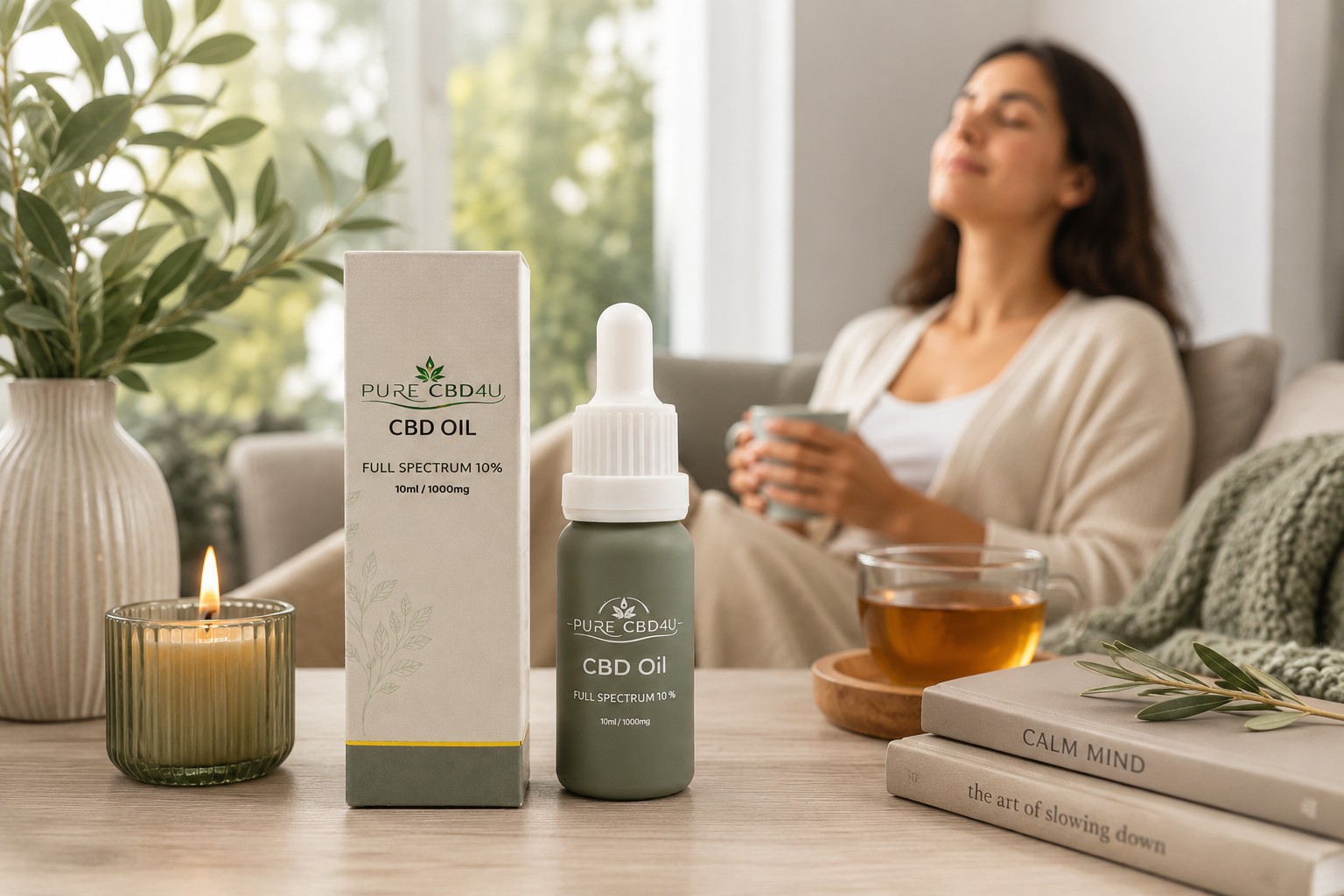
At PureCBD4U, every batch is independently tested for purity, potency and safety.
Each product includes a batch number that can be verified through its corresponding Certificate of Analysis, giving customers complete transparency before they use the product.
We believe trust should be earned through evidence—not promises.
Is CBD Right for Everyone?
CBD is not designed to be a universal solution.
Some people experience noticeable improvements in relaxation and emotional balance.
Others experience more subtle changes.
A small percentage may decide CBD simply isn’t the right fit for their lifestyle.
That’s perfectly normal.
Factors such as genetics, metabolism, stress levels, lifestyle, sleep quality and overall health all influence how someone responds to CBD.
Rather than expecting identical results, it’s better to approach CBD with realistic expectations and focus on consistency over time.
For many people, CBD becomes another healthy habit—similar to regular exercise, balanced nutrition or mindfulness practice.
Final Thoughts
Stress is an unavoidable part of life.
Whether it’s work, family responsibilities, financial concerns or simply trying to keep up with an increasingly busy world, most of us experience periods where maintaining balance becomes more challenging.
While no supplement can eliminate every source of stress, current research suggests that CBD may support the body’s natural systems involved in relaxation, emotional balance and overall wellbeing.
Scientists continue to investigate exactly how CBD interacts with the endocannabinoid system, serotonin pathways and the body’s stress response, and the evidence continues to grow each year.
At the same time, millions of people already include CBD oil in their daily wellness routines because they feel it helps them navigate everyday life with greater ease.
If you’re considering trying CBD, remember that success isn’t simply about choosing the strongest oil.
It’s about choosing the right oil.
Look for products made from premium hemp, independently tested by third-party laboratories, and supported by transparent Certificates of Analysis.
Start with a sensible dosage, remain consistent, and give your body time to respond.
Most importantly, view CBD as one part of a healthy lifestyle—not a replacement for it.
When combined with quality sleep, regular exercise, balanced nutrition and effective stress-management habits, CBD may become a valuable addition to your overall wellness routine.
At PureCBD4U, we’ve built our products around one simple principle:
Premium quality, complete transparency and evidence you can trust.
Every CBD oil is carefully formulated, independently tested and fully traceable, so you always know exactly what you’re putting into your body.
Because when it comes to your wellbeing, confidence begins with quality.
Frequently Asked Questions
Does CBD oil help with stress?
Current research suggests CBD may support the body’s natural stress response by interacting with systems involved in mood regulation, relaxation and emotional balance. Individual results vary, but many people use CBD as part of their daily wellness routine.
What is the best CBD oil for stress?
There isn’t one product that’s best for everyone. Many people choose Full Spectrum CBD Oil for the entourage effect, while others prefer Broad Spectrum CBD Oil because it contains no detectable THC.
How much CBD oil should I take for stress?
Most beginners start with 10-20mg of CBD per day and increase gradually until they find a dosage that suits their individual needs.
How long does CBD oil take to work?
When taken under the tongue, CBD oil is often absorbed within 15 to 45 minutes, although individual experiences vary.
How long should I use CBD before expecting results?
Some people notice subtle changes within a few days, while others find that consistent use over two to four weeks provides the best indication of whether CBD fits their wellness routine.
Can CBD oil help improve sleep?
Many people use CBD because supporting relaxation may also contribute to healthier sleep patterns, particularly when stress is affecting sleep quality.
Will CBD make me feel high?
No. CBD is non-intoxicating and does not produce the psychoactive effects associated with THC.
Can I use CBD oil every day?
Yes. Many people include CBD oil as part of their daily wellness routine. Consistent use is often more beneficial than occasional use.
Can CBD interact with medications?
Yes. CBD may affect how certain medications are processed by the liver. Always consult your healthcare professional before combining CBD with prescription medicines.
Is CBD addictive?
According to the World Health Organization, CBD is not considered addictive and has a low potential for abuse or dependence.
How do I know if a CBD oil is high quality?
Choose products that provide:
- Independent third-party laboratory testing
- Batch-specific Certificates of Analysis (COAs)
- Transparent ingredient information
- Clearly labelled CBD concentrations
- Premium hemp sources
Can I travel with CBD oil?
CBD laws differ between countries. Always check local regulations before travelling and keep your product in its original packaging whenever possible.
What’s the difference between CBD oil and CBD gummies?
CBD oil generally offers faster absorption and flexible dosing, while CBD gummies provide convenient, pre-measured servings that are easy to take on the go.
Is Full Spectrum or Broad Spectrum CBD better?
Both offer unique advantages. Full Spectrum CBD contains trace amounts of THC, while Broad Spectrum CBD has the THC removed. The best choice depends on your personal preferences and lifestyle.
Is CBD approved by the FDA?
Most over-the-counter CBD products are not approved by the U.S. Food and Drug Administration (FDA) as medicines. That’s why it’s important to choose brands that provide independent laboratory testing and complete product transparency.
Written by Carmen Dos Anjos Germano, Founder of Pure CBD4U
Carmen founded Pure CBD4U after her own search for reliable, high-quality CBD oil, starting with full spectrum CBD oil 5% as part of her personal wellness routine. That experience shaped the company’s focus on transparency, quality and independent testing. Pure CBD4U works with EU-grown hemp, uses third-party laboratory testing, and makes batch results accessible through QR codes on its products. Carmen remains closely involved in product selection, quality standards and the development of the Pure CBD4U range.

Leave a Reply