
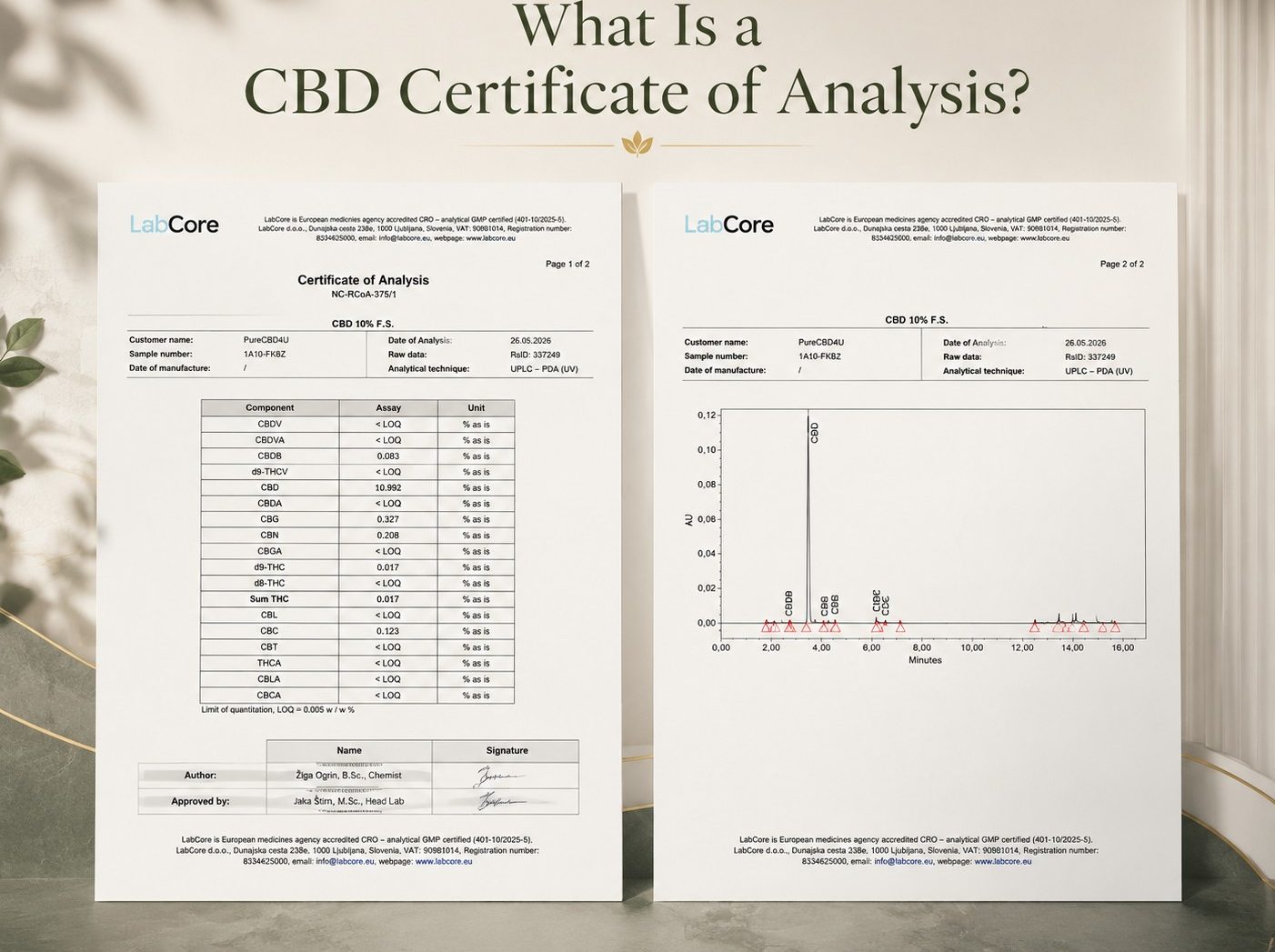
Would you buy a product without knowing what’s actually inside it? Most people would say no without hesitating. Yet in the CBD industry, that’s exactly what happens every time someone buys based on a label alone. A Certificate of Analysis, or COA, exists to close that gap — it’s the difference between trusting a claim and confirming it.
What a Certificate of Analysis Actually Is
A Certificate of Analysis is a document produced by a laboratory after testing a sample of a specific product batch. Rather than repeating what the brand says should be in the bottle, it reports what an independent lab actually found. In an industry built largely on trust and self-reporting, a COA is the one document that isn’t written by the company trying to sell you something.
Why Independent Laboratory Testing Matters So Much Here
Hemp and CBD products don’t carry the same regulatory oversight as pharmaceuticals, which means manufacturers are largely responsible for verifying their own claims. That’s a reasonable system when brands are diligent — and a risky one when they aren’t. Independent laboratory testing introduces a neutral third party into that equation, someone with no financial stake in whether the results look good. That independence is exactly why a COA carries weight that marketing copy simply can’t.
How a COA Confirms the Label Is Telling the Truth
At its core, a COA answers a simple question: does this product actually contain what it says it does? It lists the measured cannabinoid content — CBD, and often others — so you can compare it directly against the label’s claim. This is the single most practical use of a COA for an everyday buyer: it turns a label from an unverified promise into a checkable fact.
Why a COA Also Covers THC and Contaminants
Potency isn’t the only thing a proper COA verifies. It should also confirm that THC content falls within the legal limit, and screen for contaminants such as heavy metals, pesticides, and residual solvents, along with microbial safety. Hemp readily absorbs substances from the soil it’s grown in, so this screening isn’t a formality — it’s a meaningful safety check. If you want a closer, line-by-line look at how to interpret these specific values, our guide How to Read a CBD Lab Report walks through that in detail; this article is focused on why the document matters in the first place.
Why Transparency Builds Real Trust
Publishing a COA costs a brand nothing but a little exposure — and that’s precisely why it’s such a meaningful signal. A company willing to have its products independently checked, and willing to show you the results, is making a statement about how it wants to be judged: on verified fact rather than persuasive language. Over time, that kind of transparency is what separates brands people trust for years from ones that quietly disappear after a few bad reviews.
Why Batch-Specific COAs Matter More Than Generic Ones
Not all COAs are created equal. Some brands publish a single report and apply it broadly across an entire product line, or reuse it across multiple manufacturing runs. That’s a weaker form of transparency, because cannabinoid content and contaminant levels can shift between batches even when the formula stays the same. A COA tied to a specific batch or lot number — one that matches the exact bottle you’re holding — is a far stronger signal of genuine quality control than a general, one-size-fits-all report.
Why QR Codes Have Made COAs Easier to Access
It used to be common for COAs to be buried somewhere on a brand’s website, if they were available at all. That’s changed. Many brands now print a QR code directly on the packaging, linking straight to that batch’s specific report. It’s a small design choice with a real effect: it removes the friction between wanting to check a product and actually being able to. If a brand has gone to the trouble of making verification that easy, it’s usually a good sign about how they operate more broadly.
Why a Missing COA Should Raise Questions
If a CBD brand can’t produce a current, batch-specific COA on request, that’s worth treating as a genuine warning sign rather than a minor inconvenience. It doesn’t necessarily mean the product is unsafe, but it does mean there’s no independent way to confirm what’s actually inside it. In a market where testing is inexpensive relative to the cost of production, the absence of a COA is a choice, not an accident.
Why Marketing Claims Alone Aren’t Enough
Words like “pure,” “potent,” or “lab-tested” printed on a label are marketing language, not verification. They cost nothing to write and mean very little without a document backing them up. A COA is the difference between a brand telling you their product is high quality and actually demonstrating it. Making a habit of checking for one — before checking reviews, before reading the marketing copy — is one of the simplest ways to shop smarter in this category.
| Key Takeaways A Certificate of Analysis (COA) is independent lab verification of what’s actually in a product — not a marketing claim.A trustworthy COA confirms cannabinoid content, THC levels, and contaminant safety, and should be specific to the exact batch you’re buying.QR codes have made it easier than ever to check a COA before you buy.No COA available on request is a legitimate reason to look elsewhere. |
Written by Carmen Dos Anjos Germano, Founder of Pure CBD4U
Carmen founded Pure CBD4U after her own search for reliable, high-quality CBD oil, starting with full spectrum CBD oil 5% as part of her personal wellness routine. That experience shaped the company’s focus on transparency, quality and independent testing. Pure CBD4U works with EU-grown hemp, uses third-party laboratory testing, and makes batch results accessible through QR codes on its products. Carmen remains closely involved in product selection, quality standards and the development of the Pure CBD4U range.

Leave a Reply