
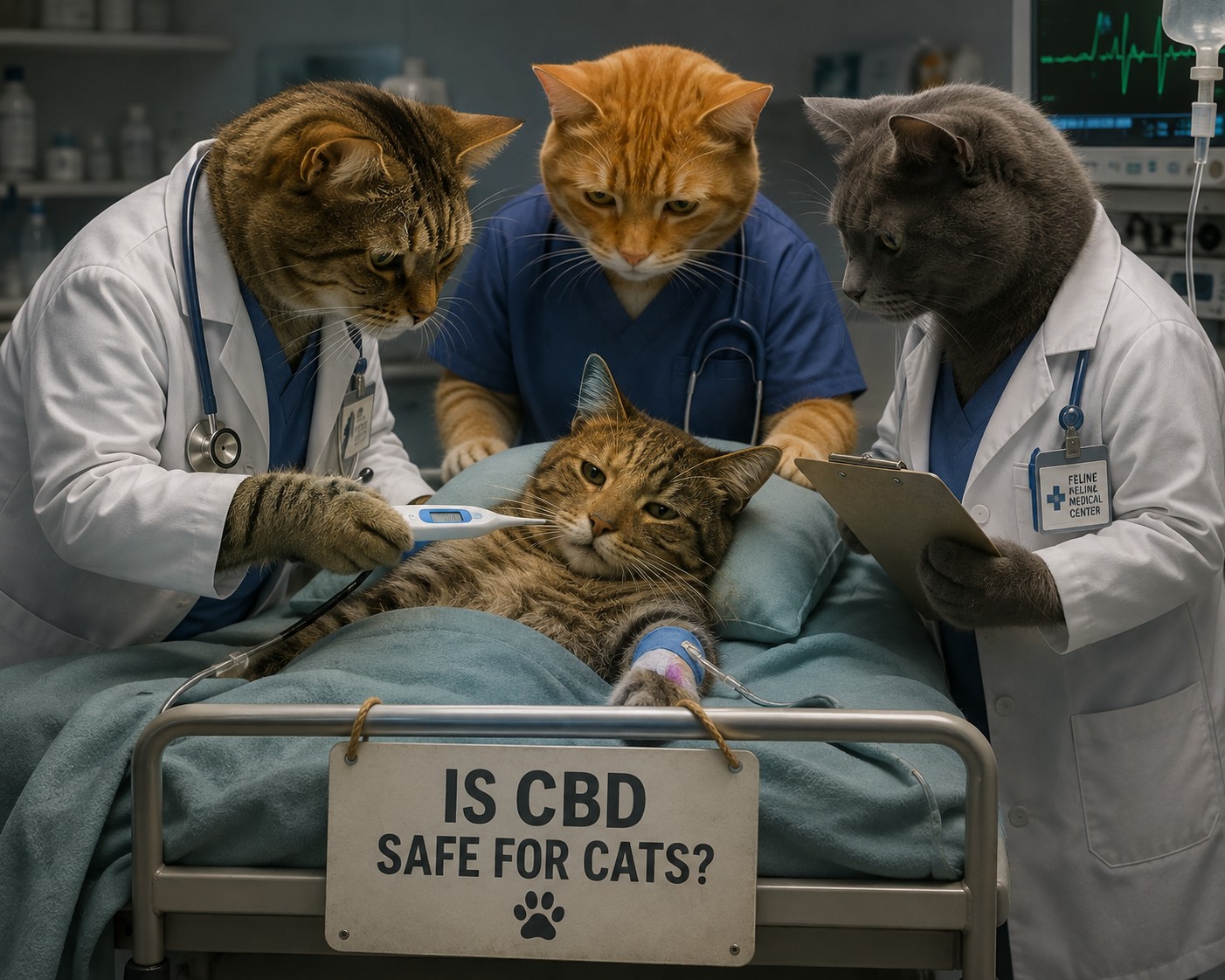
Cats are not small dogs, and this question deserves an answer that actually reflects that, rather than a generic pet-safety page with “cat” swapped in for “dog.” The short version: CBD can be safe for cats, but the margin for error is smaller than with dogs, and a handful of specific product and dosing choices matter more here than almost anywhere else in pet CBD.
Why Cats Need a More Careful Answer Than Dogs
Cats have notably different liver enzyme activity than dogs, particularly around certain metabolic pathways. This is well documented in veterinary pharmacology generally, not something specific to CBD, and it’s the same underlying reason several human and dog medications are unsafe for cats even at doses that would be fine for a similarly sized dog. It doesn’t mean CBD is unsafe for cats. It means the product quality and dosing precision matter more, and a “just use less than you would for a dog” approach isn’t reliable.
Green Flags: Signs You’re Looking at a Genuinely Safe Product
✓ Independent, third-party lab testing, not just an in-house quality claim
✓ A Certificate of Analysis (COA) you can actually access, not just a claim that one exists
✓ Clearly stated CBD concentration in mg per ml, not a vague “CBD-rich” label
✓ Broad spectrum or a formula specifically confirmed to be free of detectable THC
✓ No added xylitol, essential oils, or other ingredients that are separately known to be toxic to cats
✓ A product formulated and dosed specifically for pets, not a human CBD oil used off-label
Red Flags: Reasons to Put a Product Back on the Shelf
✗ No lab testing information available anywhere, even on request
✗ Vague dosing instructions with no mg-per-drop or mg-per-ml figure
✗ Marketing language that promises to cure or treat a specific diagnosed condition
✗ A full spectrum product with no stated THC content, since cats are more THC-sensitive than dogs
✗ Added flavourings or ingredients you don’t recognise on the label
What Actual Research Says About CBD Safety in Cats
Research specific to cats lags behind dog-focused CBD studies, which is worth being upfront about rather than overstating the evidence. A small number of veterinary pharmacokinetic studies have looked at how cats absorb and process CBD, generally finding it reasonably well tolerated at appropriate doses, though sample sizes have been small and long-term data is still limited.
The honest summary: early evidence is reassuring, the research base is thinner than for dogs, and that gap is exactly why product quality and conservative dosing carry more weight for cats than for dogs, where there’s simply more data to lean on.
The Most Common Side Effects, and What They Actually Mean
When side effects do occur, they tend to be mild: mild drowsiness, a temporary decrease in appetite, or slightly looser stool, usually at doses higher than necessary rather than at an appropriately calculated one. None of these are typically dangerous on their own, but they’re a reasonably clear signal to reduce the dose rather than push through.
What would warrant contacting a vet rather than simply adjusting the dose: vomiting, noticeable lethargy lasting more than a day, or any behaviour that seems more like illness than mild sedation.
Cats and THC Sensitivity: Why This Matters More Than for Dogs
Cats are generally considered more sensitive to THC than dogs, even at legally compliant trace levels found in full spectrum products. This is one of the clearer, more specific reasons vets and experienced cat owners often lean toward broad spectrum CBD for cats specifically, rather than full spectrum, even though full spectrum products remain legal and are used safely by many owners across pet CBD generally.
Is CBD Safe for Kittens or Pregnant Cats?
This is one area where the honest answer is simply: we don’t know enough yet, and that’s not a satisfying non-answer, it’s the responsible one. There isn’t sufficient research on CBD use in kittens or pregnant or nursing cats to make a confident safety claim either way. We’d recommend avoiding CBD in these situations unless specifically advised otherwise by a vet familiar with your cat’s individual circumstances.
Our Take, as a Brand That Sells This Product
We wouldn’t be doing our job honestly if we only told you the reassuring parts. CBD can be a genuinely useful, well-tolerated supplement for many cats, but “can be” is doing real work in that sentence. It depends on starting with a product that’s actually lab tested and clearly labelled, dosing conservatively based on your cat’s specific weight, and treating any unusual reaction as a reason to stop and reassess rather than push through.
This is also why we formulate our pet range separately from our human products, rather than simply offering a lower dose of the same oil. Cat-specific dosing needs a concentration that allows for genuinely small, precise amounts, and we’d encourage you to be cautious of any brand that doesn’t make that distinction clearly on the label.
How This Compares to Giving Your Cat a Human CBD Product
Using a human CBD oil for a cat, even at a reduced amount, isn’t something we’d recommend. Beyond the concentration mismatch, which makes precise small dosing difficult, human products are sometimes formulated with additional ingredients, flavourings, or carrier oils that haven’t been assessed for feline safety. A product formulated specifically for pets removes that guesswork entirely.
Frequently Asked Questions
Is CBD oil safe for cats every day?
For most healthy adult cats, daily use at an appropriate, weight-based dose is generally considered safe, based on current evidence. As with any supplement, ongoing use is worth mentioning to your vet, particularly if your cat has an existing health condition.
Can CBD oil hurt my cat?
At an excessive dose, mild side effects like drowsiness or digestive upset are possible, though serious harm from CBD alone is uncommon at appropriate doses. The bigger risk generally comes from poor product quality or added ingredients that are separately toxic to cats, not from CBD itself.
Is full spectrum or broad spectrum CBD safer for cats?
Broad spectrum is generally considered the more cautious choice for cats specifically, since cats are more sensitive to THC than dogs, even at the trace levels found in legally compliant full spectrum products.
How do I know if a CBD product is actually safe for my cat?
Check for independent lab testing, an accessible Certificate of Analysis, a clearly stated CBD concentration, and confirmation that it’s specifically formulated for pets rather than a human product used off-label.
Should I ask my vet before giving my cat CBD?
It’s a reasonable step, particularly if your cat is on other medications, is a kitten, is pregnant or nursing, or has an existing liver or kidney condition. For an otherwise healthy adult cat, many owners start with a conservative, weight-based dose and monitor from there.
Written by Carmen Dos Anjos Germano, Founder of Pure CBD4U
Carmen founded Pure CBD4U after her own search for reliable, high-quality CBD oil, starting with full spectrum CBD oil 5% as part of her personal wellness routine. That experience shaped the company’s focus on transparency, quality and independent testing. Pure CBD4U works with EU-grown hemp, uses third-party laboratory testing, and makes batch results accessible through QR codes on its products. Carmen remains closely involved in product selection, quality standards and the development of the Pure CBD4U range.

Leave a Reply