Quick Answer
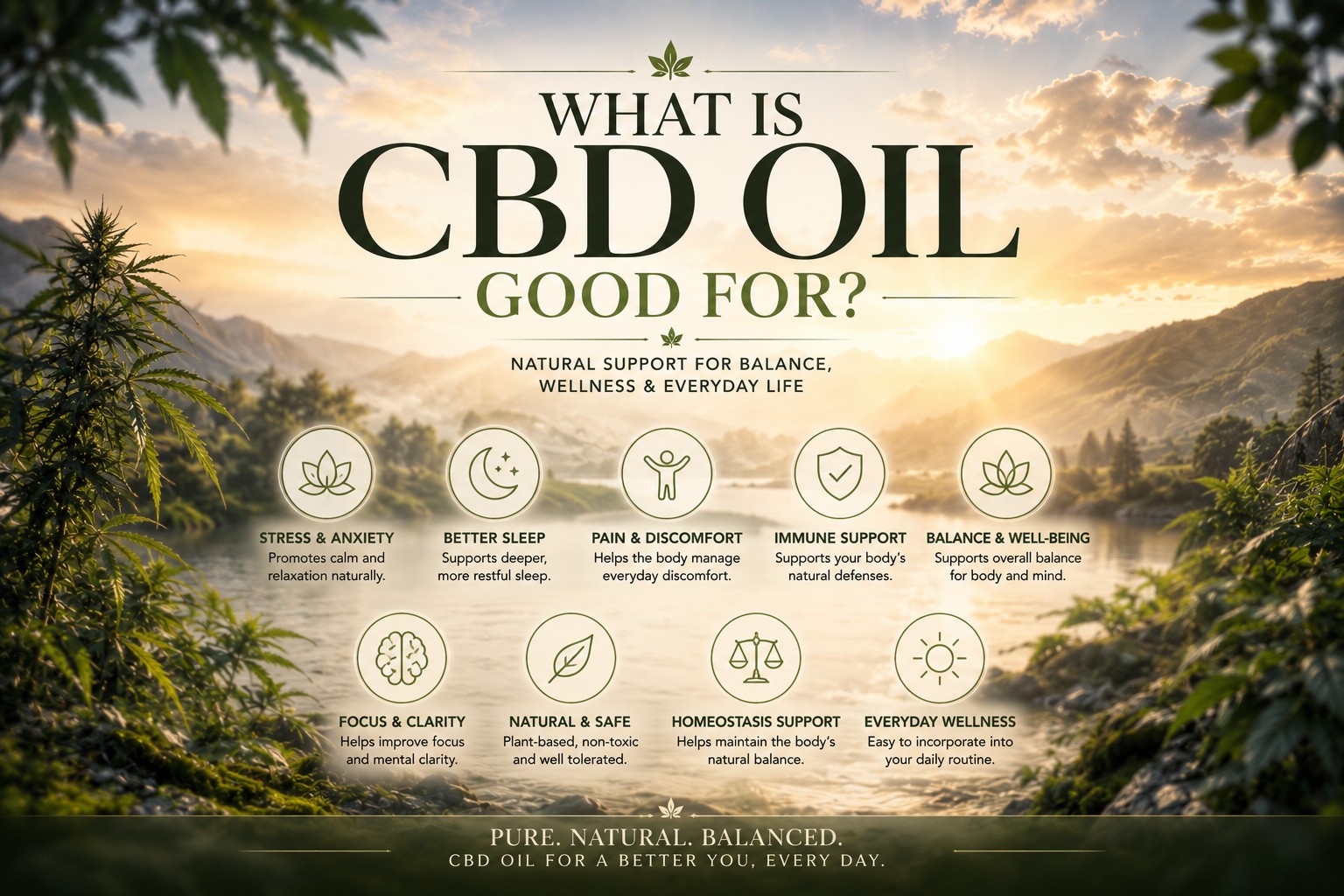
So what is CBD oil good for, really? Most people who use it regularly point to a handful of consistent themes: relaxation, managing everyday stress, supporting better sleep, recovery after physical activity, and simply maintaining a general sense of wellness and balance. These are genuinely common reasons, and they’re reflected in both user experience and a growing body of CBD research. What the evidence behind each of these uses looks like, however, varies considerably. Some applications have reasonably solid human trial data; others are supported mainly by early research, animal studies, or consistent anecdotal reporting. The honest answer to what is CBD oil good for, and what does CBD help with day to day, is: it depends on the goal, the person, and the quality of the evidence you’re willing to accept.
Why Do Millions of People Use CBD Oil?
The scale of interest in CBD over the past decade is genuinely remarkable. From a compound that most people had never heard of, cannabidiol benefits have become one of the most widely discussed topics in the wellness supplement space in the world, found in pharmacies, gyms, health food stores, and online marketplaces across dozens of countries.
Part of this growth reflects a broader shift in how people think about wellness. Many individuals are actively looking for natural approaches to complement their existing routines, manage everyday stress without relying on prescription medication, or support their general health in ways that feel intuitive and accessible rather than clinical. CBD arrived at exactly the right cultural moment, offering something that felt plant-based and holistic at a time when those qualities had significant appeal.
A subtler but equally important reason for CBD’s growth is the changing perception around cannabis and its compounds. For decades, anything derived from the cannabis plant carried significant social stigma. As public understanding has improved — particularly the understanding that CBD doesn’t produce intoxication the way THC does — that stigma has softened considerably, allowing people to explore CBD with curiosity rather than concern.
What distinguishes the CBD market from many other wellness trends is that the interest has been sustained. People who try CBD oil for everyday wellness purposes often keep using it. That continuity suggests CBD is delivering something meaningful for a significant number of users, even when individual experiences differ substantially.
The Most Common Reasons People Take CBD Oil
Relaxation
CBD for relaxation is, consistently, one of the most commonly reported reasons people reach for it. Many users describe taking CBD oil as part of a deliberate wind-down ritual: after a long day, as part of an evening routine, or in moments when they want to shift their mental state from active to quieter. The experience people report is usually subtle — not a dramatic shift, but a gentle easing of physical tension and mental noise.
Current evidence suggests CBD may interact with receptors involved in regulating emotional tone and the stress response, which could provide a plausible biological basis for these reports. Research has shown CBD can influence activity in brain areas associated with anxiety under controlled conditions. Whether this translates into the kind of everyday relaxation people describe is something the evidence supports as plausible, though not yet as established science the way a pharmaceutical trial would establish it.
Everyday Stress
CBD for everyday wellness often starts with managing the low-grade, persistent stress of modern life — overloaded schedules, screens, deadlines, the mental load of too many competing demands — and asking: why do people use CBD oil so consistently? Partly for this exact reason. Not as a solution to stress, but as a small, consistent support alongside the other things a person does to manage it.
Research on CBD and stress has included studies measuring cortisol responses, heart rate variability, and subjective reports of anxiety under controlled conditions. Results have generally been encouraging, though most studies are relatively small and short-term. Current CBD research suggests this is a promising area, but individual responses vary considerably, and consistent daily use appears to matter more than any single dose.
Better Sleep
CBD for sleep is one of the most frequently searched topics in the entire CBD wellness space, and for many people it’s become a natural part of their evening routine. The reported experience varies: some people describe falling asleep more easily; others describe waking less frequently; others simply notice their overall quality of rest improving over time.
The mechanism most often discussed isn’t a sedating effect the way a sleeping pill would work, but rather a downstream benefit: CBD helping to reduce the anxiety, discomfort, or mental restlessness that gets in the way of sleep in the first place. Research on this pathway is consistent with how many users actually describe the effect — not knocking them out, but making it easier to wind down. It’s also worth noting that some CBD products specifically combine cannabidiol with CBN, a cannabinoid associated with mild sedating qualities, specifically for this reason. Our dedicated CBD oil for sleep guide explores what current research supports in more depth.
Recovery After Exercise
CBD for recovery has attracted substantial interest across the fitness and sports community. The reasoning draws on CBD’s possible anti-inflammatory properties and its reported ability to ease post-exercise discomfort. Many athletes describe it as part of a broader recovery toolkit rather than a standalone solution.
What is CBD oil good for in a recovery context? Current evidence points to CBD’s interaction with pain and inflammatory pathways as areas of genuine research interest, though most robust data involves specific conditions rather than everyday exercise recovery. What we have is early research, plausible mechanisms, and consistent user reporting — meaningful context, even if it falls short of a well-studied pharmaceutical.
Everyday Wellness and Maintaining Balance
Perhaps the most understated but widespread use is as a daily supplement for general wellbeing — not targeting any specific symptom, but taken consistently as part of an intentional, health-conscious routine. The endocannabinoid system plays a role in regulating mood, sleep, inflammation, and appetite, suggesting that regular support of this system could have broadly positive wellbeing effects. This remains a hypothesis rather than an established clinical finding, but it’s consistent with both the biology and the experience many long-term CBD users report.
| Wellness Goal | Common Reason People Use CBD |
| Relaxation | Very common |
| Better sleep | Common |
| Recovery after exercise | Common |
| Everyday wellness | Very common |
| Focus | Some users report |
| General balance | Common |
> *”The goal of CBD isn’t necessarily to make you feel different. For many people, it’s about helping support a consistent sense of balance as part of a healthy daily routine.”*
What Does the Science Actually Say?
Honest coverage of CBD requires distinguishing between what the research has actually shown and what people report anecdotally, because these two things overlap significantly but aren’t identical.
The strongest evidence for any cannabidiol application involves epilepsy. A specific prescription medication derived from CBD, approved by the FDA for several rare seizure disorders, is backed by rigorous randomized clinical trials and represents the most clinically established use of cannabidiol in medicine today. This is important context — it demonstrates that CBD can have real, measurable physiological effects at appropriate doses under controlled conditions. But it also involved much higher doses than typical wellness products and direct medical supervision, making it quite different from the over-the-counter wellness use most people are exploring.
Beyond epilepsy, CBD research in areas like anxiety, sleep, and pain has generally been encouraging, though most human trials are small and short-term. Animal studies suggest interesting interactions with inflammatory pathways and the endocannabinoid system, but animal findings don’t automatically translate to humans. The current picture is best described as promising rather than settled, and more research is genuinely needed across most wellness applications.
Why CBD May Feel Different for Everyone
One of the most common frustrations CBD users describe is comparing experiences with other people and finding them remarkably different. Two people can take the same product, the same dose, and report noticeably different things. This isn’t a mystery.
The endocannabinoid system, which CBD primarily interacts with, is highly individual in its baseline activity. People vary in their endocannabinoid tone, metabolic rate, and body composition — all of which influence how CBD is processed and how noticeably any effect registers. Sublingual CBD oil acts more quickly than capsules or gummies because it bypasses initial digestion. Product quality is a genuine variable: an inaccurately labeled product may not contain what it claims. And consistency matters significantly — daily use over several weeks typically produces a more evaluable pattern than occasional dosing.
Adjusting based on your own response, rather than following someone else’s routine, is always going to be more informative than comparison.
Choosing the Right CBD Product for Your Goal
Full spectrum CBD retains the hemp plant’s complete cannabinoid and terpene profile including trace THC, while broad spectrum removes THC — both suit relaxation and everyday wellness, with the choice often coming down to personal THC preference. CBD oils remain the most flexible format for adjusting your dose easily; softgels and capsules suit people who prefer a pre-measured, consistent serving. Topicals work locally and suit recovery-focused applications specifically.
Some people also incorporate CBG during the day for its subtly energising reputation, and CBN in the evening. Our morning vs evening CBD guide covers this layered approach without overcomplicating a routine that should, ultimately, be simple enough to maintain.
Building a Daily CBD Wellness Routine
People who take CBD daily, at a consistent time, tend to get more predictable results than those who dose sporadically. Morning sublingual oil provides a low-key baseline through the day; an evening serving 30 to 60 minutes before bed suits those using CBD to wind down. Without logging timing, dose, and daily response, it’s easy to draw premature conclusions either way. The PureCBD4U CBD Tracker App makes this straightforward — record your intake alongside mood and sleep notes to see actual patterns over days and weeks rather than relying on memory alone.
What CBD Is NOT
Being clear about what CBD is not is as important as explaining what it might help with.
CBD is not a miracle cure — for any specific medical condition, it is not an established first-line treatment, and no responsible source should imply otherwise. It is not a replacement for medical care: anyone managing a diagnosed condition or taking prescription medication should discuss CBD with their doctor first, given real drug interaction potential. And it is not an instant solution. CBD works more like a daily wellness habit than a fast-acting medication, and people who judge it after one week at an insufficient dose have rarely given it a fair trial.
None of this diminishes what CBD may genuinely offer. But realistic expectations are the difference between someone who finds lasting value in a thoughtful routine and someone who abandons it too early.
Summary
What is CBD oil good for? For most people who use it thoughtfully and consistently, the honest answer is: supporting relaxation, managing everyday stress, improving sleep quality, complementing physical recovery, and maintaining a general sense of daily balance. These aren’t dramatic claims, and they’re backed by a combination of plausible biology, early clinical evidence, and consistent user experience — which is a reasonable basis for a wellness habit even if it falls short of pharmaceutical certainty.
CBD isn’t for everyone, and it isn’t a substitute for medical care. But for adults looking for a natural complement to an existing health-conscious routine, approached with realistic expectations, quality awareness, and a commitment to consistency, CBD oil offers genuinely interesting potential. The evidence is still developing, the individual variation is real, and the best way to discover what CBD is good for is ultimately to experience a well-managed routine for yourself.
Frequently Asked Questions
What is CBD oil good for?
Most people use CBD oil for relaxation, everyday stress management, sleep support, physical recovery, and general wellness. Evidence varies by application: anxiety has the strongest human trial data, while sleep and recovery are supported by a mix of early research and consistent user experience.
Why do people use CBD?
People use CBD for many reasons, most commonly to support relaxation, manage daily stress, sleep better, aid recovery after exercise, or simply maintain a general sense of balance as part of an intentional wellness routine. It has grown significantly in popularity as public understanding of the difference between CBD and THC has improved.
Does CBD really work?
For some applications and some people, yes. The strongest clinical evidence involves epilepsy, where an FDA-approved prescription medication exists. For broader wellness applications, evidence is promising but still developing. Individual responses vary considerably, and product quality, dosage, and consistency all influence results significantly.
What does CBD help with?
Current evidence and user experience both point to CBD as potentially helpful for relaxation, anxiety, sleep support, discomfort management, and general wellness. The depth of evidence differs by goal — anxiety is better studied than, say, recovery — but cannabidiol benefits across several of these areas are plausible and consistent with what the biology suggests.
Can CBD help me relax?
Many users report this as one of CBD’s most noticeable qualities, and research on CBD’s interaction with anxiety-related pathways supports the plausibility of a relaxation effect. Effects are typically subtle rather than dramatic — most people describe feeling calmer and less mentally busy rather than experiencing an obvious physical change.
Can CBD improve sleep?
It may, though primarily indirectly. Many users describe CBD helping them wind down more easily — reducing the mental restlessness and physical tension that interfere with sleep rather than acting as a direct sedative. Some evening products combine CBD with CBN specifically for this purpose.
Can CBD replace medication?
No. CBD is not a replacement for prescribed medical treatment, and no responsible source should suggest it is. Anyone managing a diagnosed condition or taking prescription medication should discuss CBD with their healthcare provider before starting, given real drug interaction potential through shared liver metabolism pathways.
Can healthy people take CBD?
Yes. Many CBD users are not managing any specific condition but simply incorporating it into a wellness-focused lifestyle alongside exercise, nutrition, and other healthy habits. For healthy adults, current evidence suggests CBD is generally well tolerated at typical wellness doses.
How long does CBD take to work?
Sublingual CBD oil typically produces initial effects within 15 to 45 minutes. Capsules and gummies take longer due to digestion. For goals like overall wellbeing or improved sleep quality, meaningful patterns often only become clear after one to two weeks of consistent daily use rather than after a single dose.
Is CBD good for everyday wellness?
Many regular CBD users take it specifically for this reason — not because they’re targeting a symptom, but because daily CBD use feels like a meaningful part of a health-conscious routine. The endocannabinoid system’s broad role in regulating mood, sleep, and inflammatory response makes this a biologically plausible application, though formal evidence for general daily wellness use is still limited.
What does the research say about CBD?
Research indicates CBD has measurable effects on anxiety, pain signalling, inflammation, and neurological function in both human and animal studies. The clinical evidence is strongest for epilepsy, where it’s led to FDA approval of a prescription drug. For most other wellness applications, human studies are promising but still limited in scale and duration.
Is CBD right for everyone?
Not necessarily. While many healthy adults find CBD useful for wellness purposes, individual responses vary significantly. Pregnant individuals, people with liver conditions, and those on certain medications face specific risks and should consult a healthcare professional first. The only reliable way to know whether CBD fits your particular situation is to try it carefully, with realistic expectations, at an appropriate dose.
Related Guides
Written by Carmen Dos Anjos Germano, Founder of Pure CBD4U
Carmen founded Pure CBD4U after her own search for reliable, high-quality CBD oil, starting with full spectrum CBD oil 5% as part of her personal wellness routine. That experience shaped the company’s focus on transparency, quality and independent testing. Pure CBD4U works with EU-grown hemp, uses third-party laboratory testing, and makes batch results accessible through QR codes on its products. Carmen remains closely involved in product selection, quality standards and the development of the Pure CBD4U range.

Leave a Reply