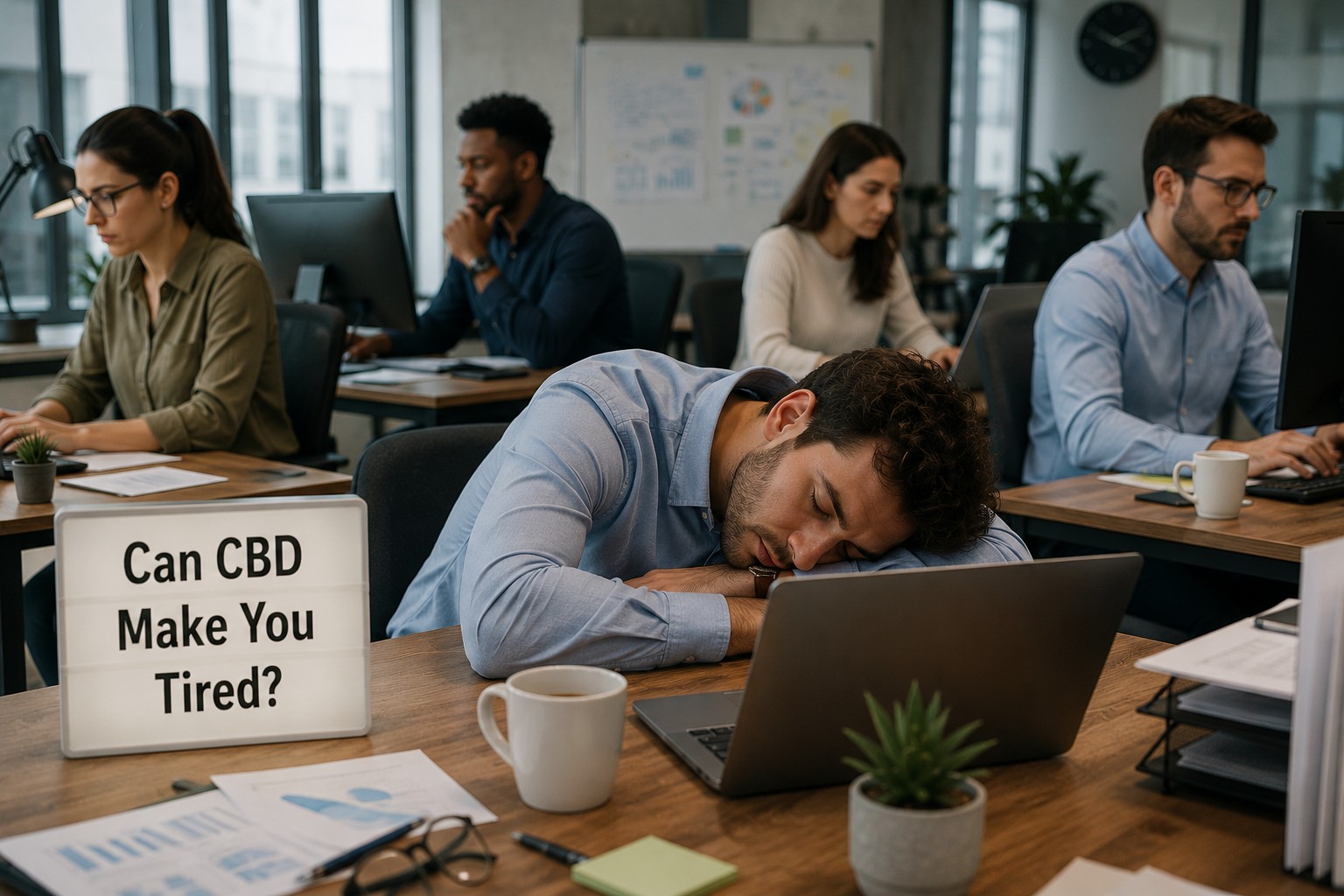
It was 12:30pm on a work-from-home Wednesday when she first noticed it. She’d taken a couple of drops of CBD oil that morning — the bottle said it was good for “everyday wellness,” and she assumed it was basically like a vitamin. By lunchtime, she felt noticeably more relaxed than usual. By 2pm, there was a quality of heaviness to her focus that she hadn’t expected. She wasn’t unable to function, but she was definitely softer around the edges than a Tuesday afternoon usually made her.
Was it the CBD? Can CBD make you tired? The short answer: sometimes, for some people. But the full answer is considerably more interesting — and less alarming.
The Misconception Worth Clearing Up First
There’s a widespread assumption that CBD is sedating by default. It’s not accurate, but it’s not baseless either. CBD shares a plant family with cannabis, which most people associate with the heavy-lidded, sunk-into-the-sofa feeling of THC. The two compounds share a plant family but produce meaningfully different experiences. CBD itself is non-intoxicating. Most people who take CBD at typical doses report feeling calmer or more settled — not sleepy. The question of does CBD make you sleepy is genuinely more nuanced than the reputation suggests.
And yet. Some people do experience CBD drowsiness, particularly at higher doses, in certain formats, or in combination with other factors. The question worth investigating isn’t whether CBD can make you tired — it can, for some people in some circumstances — but *why* it varies so dramatically from person to person.
What People Actually Experience
If you survey regular CBD users, the reports split into roughly three camps.
Many describe CBD daytime use as producing calm — reduced mental noise, slightly lower tension, a settling effect that doesn’t interfere with function. This is what most people experience at moderate doses taken during the day, and it’s one of the reasons CBD has become so widely used.
A smaller group describes genuine sleepiness — a heaviness that comes on within an hour or two, particularly after larger doses or in the evening. These people often find CBD works well as part of a sleep routine but less well during the day.
A third group reports noticing very little at all, either because their individual biology means CBD has a muted effect, or because their dose is too low to produce a clear response.
None of these experiences is wrong. They reflect real biological variation in how people respond to CBD — and several factors drive those differences.
Why Some People Get Sleepy and Others Don’t
Dose is probably the biggest factor. There’s emerging evidence that CBD may have dose-dependent effects — lower doses associated with a more alert, focusing effect; higher doses more likely to produce a relaxing or sedating quality. This means the same compound can feel quite different depending on how much of it you take, which explains why someone taking 5mg notices nothing dramatic while someone taking 40mg feels genuinely drowsy.
Full spectrum products add a complicating variable. Full spectrum CBD contains trace amounts of THC — legal, small amounts, generally under 0.3%. For most people this is meaningless in practice. But THC, even in small quantities, can contribute to sedating effects in sensitive individuals. If you’ve switched from a broad spectrum product to a full spectrum one and noticed more fatigue, this is a plausible explanation. Our full spectrum vs broad spectrum CBD guide covers the difference clearly.
CBN is a separate conversation entirely. Some CBD products combine CBD with CBN, a cannabinoid with more pronounced sedating properties. CBD sleepiness that seems stronger than expected may trace back to CBN rather than CBD itself — does CBD cause sleepiness or does CBN? Often the latter. The CBD vs CBG vs CBN comparison explains the distinctions if you’re curious.
Timing and food context matter. Taking CBD on an empty stomach produces faster, sometimes stronger initial effects than taking it after a meal. Someone who takes CBD fasted in the morning may notice more pronounced relaxation than someone who takes the same amount after dinner — which could explain an unexpected tiredness response.
Individual biology is genuinely variable. Metabolism, endocannabinoid system baseline activity, current sleep debt, and even genetics all influence how CBD is processed and experienced. Two people taking identical doses at the same time can have meaningfully different experiences, and this variability is real rather than anecdotal.
When Tiredness Is Actually the Point
It’s worth stepping back from the assumption that CBD tiredness is always a problem. For some people, in some contexts, it’s exactly what they’re looking for.
Many people use CBD evening use specifically as part of a sleep hygiene routine — not because CBD is a sleeping pill, but because the relaxation effect helps ease the mental transition toward sleep. In this context, CBD fatigue and mild drowsiness aren’t side effects; they’re the mechanism. CBD and energy are simply pointing in different directions depending on timing. Our article on CBD oil for relaxation covers this evening use case in more depth, and the best time to take CBD oil addresses timing strategy specifically.
The distinction worth drawing is between relaxation (a welcome settling of tension) and sedation (an involuntary heaviness that interferes with function). Most people reporting CBD sleepiness at wellness doses experience something closer to the former — and many find it welcome.
What to Do If CBD Makes You More Tired Than You’d Like
If you’re experiencing unwanted drowsiness with CBD, a few adjustments are worth trying before abandoning it.
Try a lower dose. This is the most direct variable to adjust, and CBD tiredness is frequently dose-related. Our CBD dosage guide suggests starting lower than you think necessary and adjusting upward slowly — which is easier to do than working back down from an amount that’s too high.
Shift your timing to the evening. If daytime use produces unwanted fatigue, an evening dose aligns the effect with a period when relaxation is more useful. This is a practical reframe rather than a workaround.
Check your product. If it contains CBN or is full spectrum with notable THC content, switching to a broad spectrum or isolate product may reduce the sedating effect.
Track your response. What CBD actually does in your system is nearly impossible to understand from memory alone — especially if you’re building a CBD oil for daily wellness routine around it. The CBD Wellness App is built for exactly this kind of pattern tracking.
What the Science Currently Says
Research on can CBD make you tired is genuine but still developing. Human studies have documented drowsiness as an adverse effect in clinical CBD trials, primarily at doses significantly higher than typical wellness use. At lower everyday doses, evidence for sedation is less consistent — some studies show mild relaxation, others show no significant effect on alertness.
Current evidence suggests CBD’s effects on fatigue and energy are dose-dependent and individually variable, also influenced by other compounds in a product. More nuanced, dose-specific human research is still needed. Our CBD side effects guide covers the full range of reported reactions with more depth than this article allows.
Frequently Asked Questions
Can CBD make you tired or sleepy?
Yes, for some people — especially at higher doses or in products containing CBN or full spectrum THC traces. At lower everyday doses, most people experience calm rather than genuine sleepiness. Can CBD make you tired at daytime wellness doses? Less commonly than the reputation suggests.
Why does CBD make me tired?
CBD tiredness is most commonly dose-related. It may also be influenced by full spectrum THC content, the presence of CBN in a product, individual metabolism, or taking CBD on an empty stomach. Starting with a lower dose often resolves it.
Is it normal to feel sleepy after CBD?
It’s not universal, but it’s a documented and common enough experience to take seriously. If your dose is producing more fatigue than you’d like, a lower amount taken with food — or shifting to evening use — usually helps.
Can I take CBD during the day without feeling tired?
Most people can, particularly at lower to moderate doses. Daytime CBD use is common and well tolerated for the majority of users. The key variables are dose, product type, and individual sensitivity.
Does CBD affect energy levels?
At lower doses, some users describe feeling more focused. At higher doses, sedation is more likely. Current evidence suggests the relationship between CBD and energy or alertness is dose-dependent and varies between individuals.
Is CBN more sedating than CBD?
Yes, generally. CBN is associated with more pronounced sedating effects than CBD. If your CBD product contains CBN and you’re experiencing fatigue, that may be the more relevant factor. The CBD vs CBG vs CBN guide explains the differences.
Written by Carmen Dos Anjos Germano, Founder of Pure CBD4U
Carmen founded Pure CBD4U after her own search for reliable, high-quality CBD oil, starting with full spectrum CBD oil 5% as part of her personal wellness routine. That experience shaped the company’s focus on transparency, quality and independent testing. Pure CBD4U works with EU-grown hemp, uses third-party laboratory testing, and makes batch results accessible through QR codes on its products. Carmen remains closely involved in product selection, quality standards and the development of the Pure CBD4U range.

Leave a Reply