
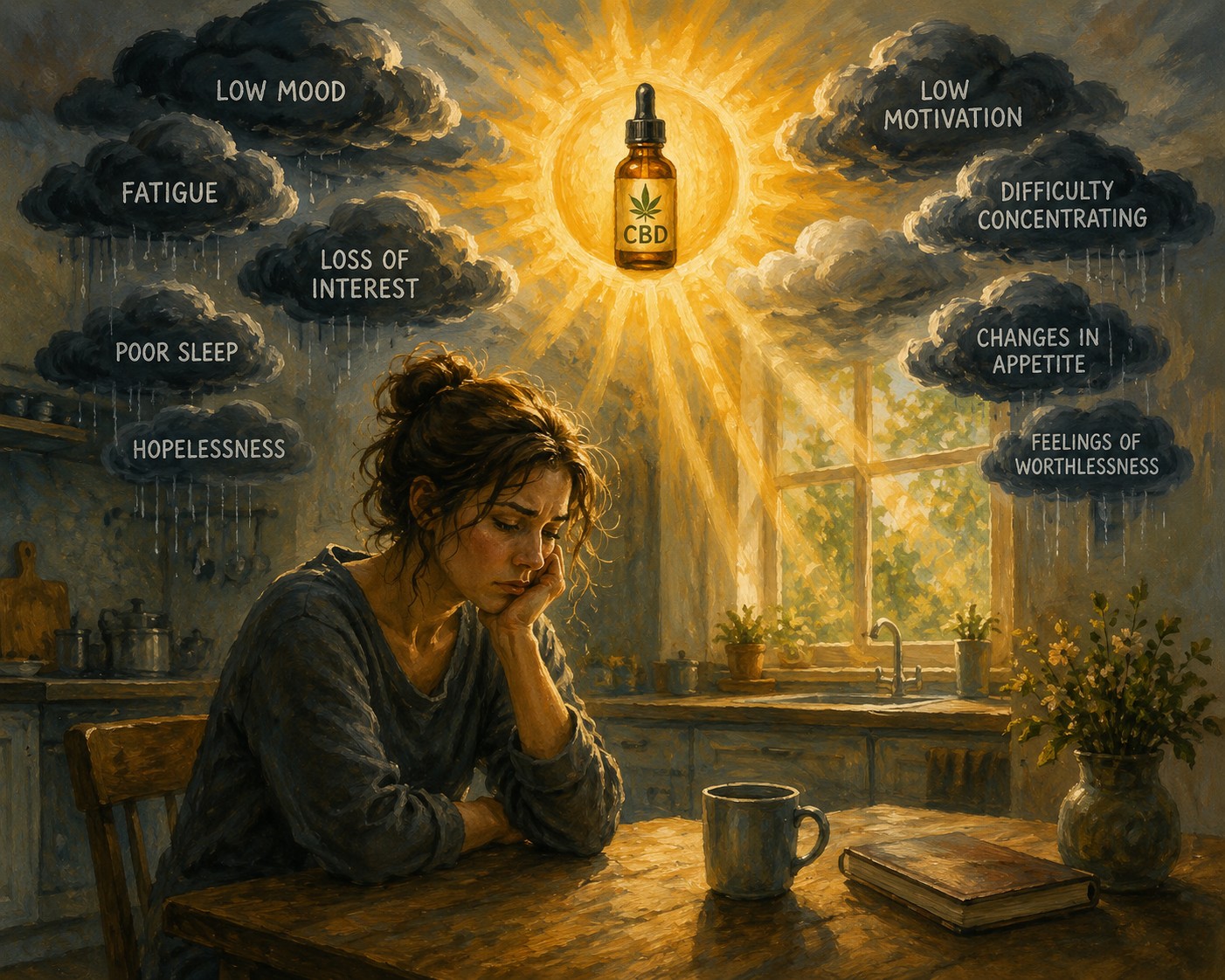
Depression isn’t always crying. That single fact surprises a lot of people, since the popular image of depression — tears, visible sadness, an obvious low — only tells part of the story. For many people, it looks like something quieter and, in its own way, harder to name: no excitement about things that used to matter, no real motivation to start the day, no particular enjoyment even in moments that should feel good. Not sadness exactly. Something closer to nothing at all.
There’s a specific term for this: loss of interest, sometimes described clinically as anhedonia — a reduced capacity to feel pleasure or engagement in activities that once felt meaningful. It’s one of several ways depression can show up, and it looks nothing like the crying-on-the-floor image most people carry around. Depression affects people very differently, which is part of why it’s so often missed, minimized, or misunderstood, including by the person experiencing it.
What Depression Symptoms Can Actually Look Like
Beyond persistent low mood, which is the symptom most people expect, depression commonly involves a cluster of other changes. Loss of pleasure or interest in previously enjoyable activities is a core feature for many people, sometimes more prominent than sadness itself. Fatigue and low motivation often show up together — not just tiredness, but a kind of heaviness that makes even small tasks feel disproportionately difficult. Difficulty concentrating is common too, a mental fog that can affect work, conversations, or simply following a book or a film.
Sleep changes go in either direction — sleeping considerably more than usual, or struggling to sleep at all — and appetite can shift similarly, increasing or decreasing without an obvious explanation. Feelings of hopelessness, a sense that things won’t improve or aren’t worth the effort, are another recognized symptom worth taking seriously rather than dismissing as ordinary pessimism.
It’s also worth noting that these symptoms don’t always arrive together, and their intensity can vary considerably from person to person and even day to day. Someone might experience profound fatigue and loss of interest without much change in appetite. Someone else might notice sleep and concentration changes long before anything resembling sadness sets in. This variability is part of why depression is so often missed in its early stages, both by the person experiencing it and by people around them who may be looking for a more familiar, visible presentation.
None of this is offered as a checklist for self-diagnosis, and it’s worth being direct about that: these symptoms overlap with many other conditions and with ordinary difficult periods of life, and accurately distinguishing between them is genuinely a job for a healthcare professional, not an article. What is worth remembering is simpler and more actionable — symptoms like these, when they persist for more than two weeks, are always worth discussing with a doctor or mental health professional, regardless of how they present or how confident anyone feels about naming them.
Why Depression Rarely Has One Single Cause
Depression is rarely the result of one identifiable trigger, and it helps to think of it less like a single switch flipping and more like a puzzle assembled from several different pieces, often accumulating over time. Genetics play a real role — family history meaningfully affects individual risk, even though genetics alone rarely explains the full picture. Stressful life events — loss, major transitions, relationship difficulties — can act as triggers, particularly layered on top of other existing vulnerabilities. Chronic, ongoing stress, distinct from a single acute event, wears differently on the body and mind over months or years.
Brain chemistry, including the regulation of neurotransmitters like serotonin and dopamine, is part of the puzzle too, though the popular idea of depression as simply “a chemical imbalance” oversimplifies a considerably more complex picture. Physical illness can contribute directly, both through the biological burden of illness itself and through its emotional impact. Hormonal changes — postpartum, thyroid-related, or otherwise — are a recognized contributing factor for some people. And social isolation, the absence of meaningful connection and support, is both a potential contributor and something depression itself often deepens, creating its own difficult cycle. With this many potential pieces, often combining differently in different people, there was never going to be one single cause, and correspondingly, no single fix.
Where CBD Enters This Conversation
It’s within this complex, multi-factor picture that CBD has become something a number of people managing low mood or depression-related symptoms look into — generally hoping for support alongside their broader care, not a solution to something this layered.
CBD’s interaction with the endocannabinoid system, which has documented involvement in mood regulation and stress response, rests on genuine, established pharmacology, and its interaction with serotonin 5-HT1A receptors offers a plausible mechanistic link to mood-related processes specifically. Laboratory research and animal studies have explored CBD’s antidepressant-like effects in various models, with some encouraging findings around mood-related behavior — mechanistically interesting, though animal findings don’t automatically translate to the same effect in human patients with clinical depression.
Human clinical trials specifically evaluating CBD as a treatment for depression remain limited in number and scale. Observational studies and smaller trials have suggested CBD may offer indirect benefits — through reduced anxiety, improved sleep, or general stress regulation — which could plausibly support mood indirectly without CBD acting as a direct antidepressant mechanism itself. That distinction matters considerably: current evidence is not sufficient to conclude that CBD treats depression, and research in this specific area remains genuinely ongoing rather than settled. Any claim suggesting otherwise goes beyond what the evidence currently supports.
| Separating the evidence honestly Established: CBD interacts with mood- and stress-regulating receptor systems Animal/lab research: encouraging antidepressant-like findings, not yet confirmed in clinical human trials Emerging: possible indirect mood support through reduced anxiety or improved sleep Not established: CBD as a treatment for depression |
Can CBD Replace Depression Treatment?
No. This deserves a clear, direct answer. Depression is a genuinely treatable condition, and the treatments with the strongest evidence behind them — therapy, psychological support, and, where appropriate, prescribed medication — work through mechanisms and processes that CBD has not been shown to replicate or replace. Cognitive behavioral therapy and other evidence-based psychological approaches address thought patterns and coping strategies directly. Prescribed antidepressant medications work through specific, well-studied neurochemical mechanisms, carefully matched to an individual’s needs by a prescribing professional. Lifestyle interventions, discussed further below, provide additional, evidence-based support alongside these core treatments.
It’s important to be direct about one thing specifically: anyone currently taking prescribed antidepressant medication should never stop or reduce it in favor of CBD, or anything else, without medical supervision. Antidepressants often require careful, gradual tapering under a doctor’s guidance, and stopping abruptly can cause withdrawal effects or a return of symptoms, sometimes more intensely than before. CBD may be something some people choose to discuss with their healthcare provider as a potential addition to their care, but it is not a substitute for treatment that’s actively managing a diagnosed condition.
Supporting Emotional Wellbeing
Alongside professional treatment where needed, several evidence-based habits genuinely support emotional wellbeing more broadly. Regular exercise has a well-documented, meaningful effect on mood, comparable in some studies to other interventions for mild to moderate symptoms. Daylight exposure supports circadian rhythm and has a recognized relationship with mood regulation, particularly relevant during darker months. Social connection directly counters the isolation that often accompanies low mood, and maintaining relationships, even in small ways, provides real protective value.
Healthy sleep habits support the same underlying biological systems involved in mood regulation, and balanced nutrition contributes to overall physical and mental health in ways that are increasingly well studied. Stress management, through whatever combination of practices genuinely works for an individual, addresses one of the recognized contributing factors directly. Within this broader wellbeing plan, some people choose to discuss CBD with their healthcare professional as one possible supportive addition — not a centerpiece, and not a substitute for any of the approaches above.
Back to What’s Often Invisible
Depression isn’t always visible, and it doesn’t always look like what most people expect. Sometimes it looks like silence. Sometimes it looks like someone quietly losing interest in things that used to matter to them, without any tears at all. Understanding the range of ways depression can actually present is often the first real step toward getting the right kind of support — more useful, in most cases, than trying to name or diagnose it alone.
CBD may become one supportive part of a wider wellness approach for some people navigating low mood or depression-related symptoms. But it should never replace professional mental health care or evidence-based treatment for depression — those remain the foundation, with anything else, CBD included, sitting alongside them rather than in place of them.
This article is intended for general educational purposes and is not medical advice. CBD is not a treatment for depression and should never replace therapy, prescribed medication, or professional mental health care. If you are experiencing persistent low mood, hopelessness, or thoughts of self-harm, please speak with a doctor or mental health professional, or contact a crisis support service in your area.
Written by Carmen Dos Anjos Germano, Founder of Pure CBD4U
Carmen founded Pure CBD4U after her own search for reliable, high-quality CBD oil, starting with full spectrum CBD oil 5% as part of her personal wellness routine. That experience shaped the company’s focus on transparency, quality and independent testing. Pure CBD4U works with EU-grown hemp, uses third-party laboratory testing, and makes batch results accessible through QR codes on its products. Carmen remains closely involved in product selection, quality standards and the development of the Pure CBD4U range.

Leave a Reply