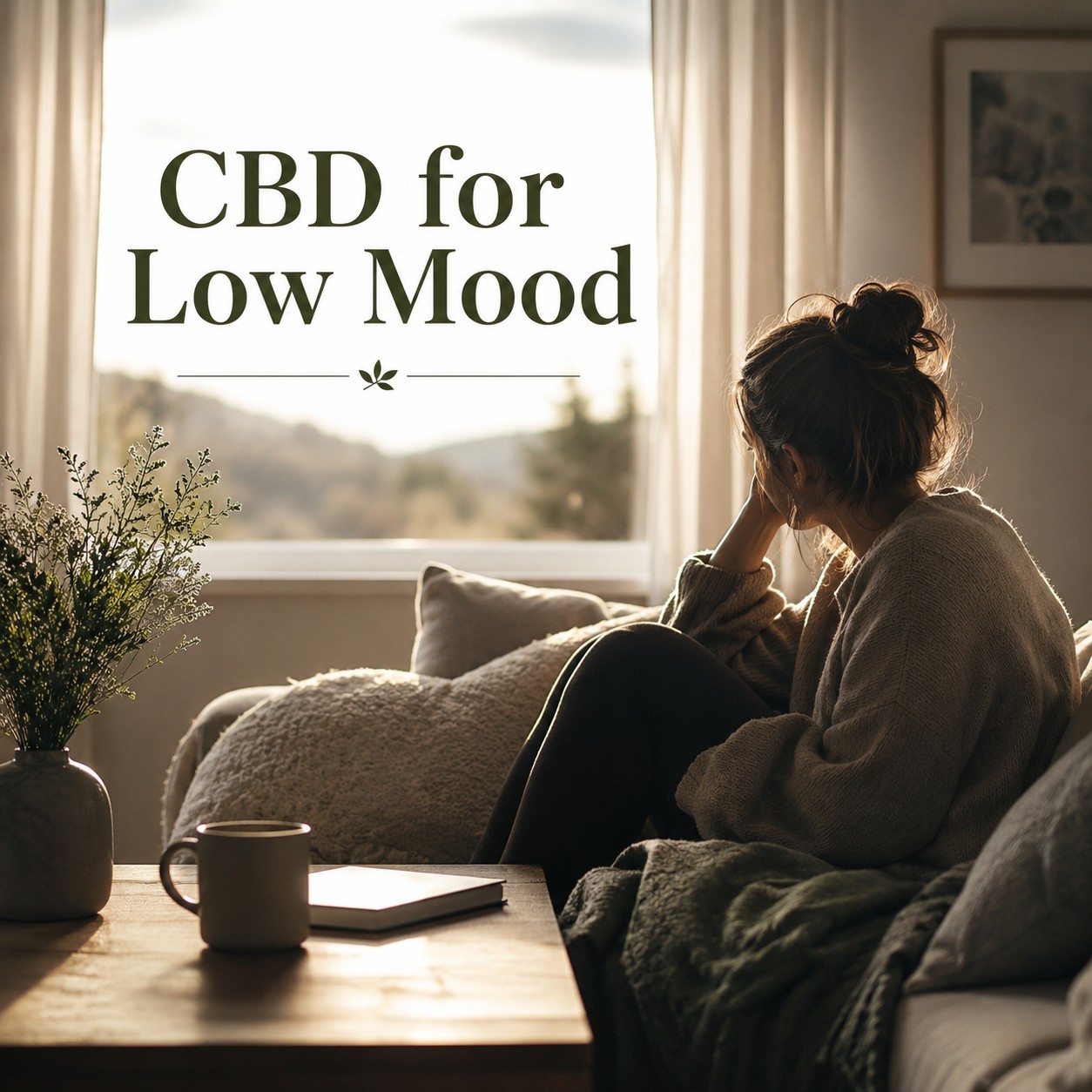
A grey Tuesday. Nothing terrible has happened. Nothing particularly good, either. The coffee tastes the same as it always does, and yet somehow doesn’t quite land the way it used to. A favorite song comes on in the car, and it registers as sound rather than music — technically fine, emotionally distant. A friend’s message sits unanswered a little longer than it would on an ordinary day, not out of any real reason, just a kind of low-grade inertia that’s hard to name. The commute looks the same, the desk looks the same, the same colleagues say the same good mornings. Nothing is wrong, exactly. Everything simply feels… flat. Not grief. Not despair. Just less color than usual.
Is this what people mean when they say they feel “low”? For a lot of people, yes — and it’s worth taking that feeling seriously enough to actually understand it, rather than either dismissing it as nothing or assuming it’s something far more serious than it is. It’s one of those experiences that’s simultaneously incredibly common and rarely discussed with much precision, which leaves a lot of people quietly wondering which category their own Tuesday actually belongs to.
What Low Mood Actually Is — and What It Isn’t
Low mood, in the everyday sense, is a temporary dip in emotional tone — things feel a bit duller, a bit heavier, a bit less engaging than usual, without a dramatic cause and without lasting very long. It’s the sensation of watching your own life through slightly frosted glass for a day or two: recognizable, still yours, just not quite as vivid. It’s different from stress, which usually has a clear, identifiable pressure behind it — a deadline, a conflict, too much to do, something you could point to if someone asked “what’s wrong?” Low mood, frustratingly, often doesn’t come with that same clear answer.
It’s different from emotional exhaustion, which tends to follow a specific period of sustained demand — the aftermath of a hard project, a caregiving stretch, a difficult season that finally lets up and leaves you depleted rather than relieved. It’s different again from burnout, which is more chronic still, often tied specifically to overextension at work or in caregiving, and which usually comes with a sense of cynicism or detachment from something you used to care about. And it’s different from grief, which follows an identifiable loss and has its own particular shape, its own waves, its own timeline that doesn’t map neatly onto a calendar.
And it’s different, in a meaningful clinical sense, from depression. Everyone experiences periods of low mood — it’s a completely normal part of being human, as ordinary as catching a cold, and these periods typically pass on their own within a few days, often without any specific intervention at all. Depression is a diagnosable condition, generally involving a cluster of symptoms — persistent low mood, loss of interest, changes in sleep or appetite, fatigue, difficulty concentrating — present most days for two weeks or more, often with a significant impact on daily functioning. It doesn’t lift on its own the way an ordinary low patch does, and it doesn’t respond reliably to a good night’s sleep or a nice weekend.
That distinction matters enormously, not to minimize either experience, but because they call for genuinely different responses. A passing low mood usually responds well to rest, connection, and time — the kind of thing this article spends most of its time on. Depression is a genuinely treatable medical condition that benefits from professional support, and symptoms that persist beyond a couple of weeks, or that come with hopelessness or thoughts of self-harm, are always worth bringing to a doctor or mental health professional — not something to wait out alone, and not something any wellness habit, CBD included, is equipped to resolve on its own.
Why an Ordinary Day Can Suddenly Feel Flat
Low mood rarely traces back to one single cause. It’s much more often an accumulation — several small, individually manageable factors stacking up until the combined weight is felt, even though no single piece of it would explain the whole thing on its own, and no single piece would even register as a real problem if you mentioned it out loud to a friend. “I slept badly, my inbox is full, and it’s been raining for a week” doesn’t sound like much as a list. Felt all together, on the same Tuesday, it can be considerably more than the sum of its parts.
Poor sleep is one of the most common and most underrated contributors; even a few nights of shorter or lower-quality sleep measurably affects mood regulation the following days, showing up as irritability, flatness, or a shorter emotional fuse well before anyone connects it back to the sleep itself. Relationship problems, whether an ongoing tension or a single difficult conversation, cast a longer emotional shadow than people often expect — a disagreement that felt resolved on the surface can keep quietly running in the background for days. Financial stress operates similarly — a background hum of worry that doesn’t need to be acute to wear on mood over time, showing up less as panic and more as a persistent, low-level heaviness that colors everything else.
Working too much, without enough recovery in between, gradually flattens emotional range even before it produces obvious burnout — the enjoyable things start to feel like one more item on a list rather than something to actually look forward to. Loneliness and social isolation are significant, frequently overlooked contributors — humans are fundamentally social, and a stretch of days with little real connection takes a genuine toll, even for people who consider themselves fairly independent or introverted. Seasonal changes affect a meaningful number of people, particularly reduced daylight during autumn and winter months, tied to circadian rhythm and light exposure in ways that are well documented rather than merely anecdotal. A lack of exercise removes one of the more reliable natural mood supports available, and hormonal fluctuations — monthly, postpartum, or otherwise — have well-documented effects on emotional tone for many people, often dismissed too quickly as “just hormones” rather than taken seriously as a real physiological driver.
Constant exposure to bad news, and too much passive social media scrolling, both correlate with lower mood in a growing body of research — neither is dramatic on its own, but both add up in the background, a slow accumulation of comparison, alarm, and information with nowhere productive to go. Poor nutrition affects mood more than most people realize, given how closely gut health and brain chemistry are linked through what’s sometimes called the gut-brain axis. Chronic, ongoing stress wears differently than a single stressful event — it doesn’t spike and resolve, it simply persists, gradually eroding the reserves that would otherwise buffer against a bad day. Emotional overload — too many demands on attention and feeling, all at once — can flatten mood simply by leaving nothing left to feel with, a kind of temporary numbness that’s less about sadness and more about depletion. Life transitions, even positive ones like a new job, a move, or a wedding, carry a genuine emotional cost that’s easy to underestimate because the change itself is “good” and therefore feels like it shouldn’t come with any difficulty at all.
Rarely is it just one of these. Usually, it’s several, quietly overlapping — a bad night’s sleep on top of a stressful week on top of a grey, sunless stretch of weather, none of which would tip the scale alone. Recognizing that layered quality is often the first useful step, since it reframes the question from “what’s wrong with me” to “what’s actually been happening lately” — a much more answerable, and considerably less alarming, question.
What’s Actually Happening in the Brain
Without turning this into a neuroscience lecture, it helps to understand the rough shape of what’s going on, since a little understanding tends to make a flat day feel less mysterious and less personal. Stress hormones, particularly cortisol, rise in response to pressure and, when elevated for extended periods, measurably affect mood, energy, and motivation — the body’s alarm system, useful in short bursts, considerably less useful left running continuously in the background of an ordinary week. Brain chemistry — the balance and activity of various neurotransmitters — plays a role in emotional tone, though it’s a far more complex, interconnected system than the old “chemical imbalance” shorthand suggests, and no single measurement or number captures it adequately.
Emotional processing itself takes real cognitive resources; when someone is depleted, whether from poor sleep, overwork, or accumulated stress, that processing becomes harder, which often shows up as flatness rather than sharp distress — not an inability to feel, exactly, but a kind of processing lag, like a phone running too many apps at once and slowing everything down as a result. Sleep is deeply intertwined with all of this, both as a cause and an effect — poor mood disrupts sleep, and poor sleep worsens mood, in a loop that can be hard to interrupt without addressing both sides deliberately rather than waiting for one to fix the other on its own.
Serotonin, a signaling molecule involved in mood, sleep, and much more, plays a role too, though its true function is considerably more nuanced than “more serotonin equals happier” — a myth worth setting aside properly later in this piece, since it’s one of the more persistent oversimplifications in popular mental health writing. And the endocannabinoid system, a regulatory network involved in stress response and emotional balance, is where CBD’s potential relevance actually enters the picture — a genuinely interesting piece of human physiology that most people have never heard of, despite it running quietly in the background of stress regulation their entire lives.
Where CBD Enters This Conversation
It’s within this layered, multi-factor picture — poor sleep, stress, isolation, brain chemistry, all interacting simultaneously rather than one at a time — that CBD has become something a number of people navigating a low patch look into, generally hoping for a gentle, supportive nudge rather than a dramatic transformation. Nobody buying a bottle of CBD oil on a grey Tuesday is expecting fireworks. Most people, if you ask them honestly, are hoping for something considerably more modest: slightly less edge, slightly better sleep, slightly more capacity to get through an ordinary day without everything feeling quite so heavy.
CBD interacts with the endocannabinoid system, and specifically with the 5-HT1A serotonin receptor, both genuinely established, published pharmacology. This interaction is real and worth taking seriously as a starting point — it isn’t marketing invention, it’s documented mechanism. From there, though, it’s important to be precise about what current research does and doesn’t show. Some human studies suggest CBD may support feelings of calm, and anxiety-specific research is genuinely more encouraging than research on mood or depression directly — anxiety and low mood overlap in experience but aren’t identical, and the research bases for each are at meaningfully different stages of development.
Evidence regarding mood itself — as distinct from anxiety or stress — remains considerably more limited, and it would be inaccurate to imply CBD has antidepressant effects in any established, clinical sense. It would be equally inaccurate, though, to dismiss the mechanistic interest entirely, since a real, published receptor interaction is not nothing — it’s simply not yet enough, on its own, to support a treatment claim. The honest position sits in between those two extremes, and staying there — rather than drifting toward either overpromising or dismissing the research outright — is really the point of this whole section.
| Sorting the evidence honestly Established: CBD interacts with the endocannabinoid system and 5-HT1A serotonin receptors Emerging: research on stress-related outcomes, emotional wellbeing, and some animal studies Not established: CBD treating depression, curing low mood, increasing happiness, or replacing therapy or antidepressants |
A Few Myths Worth Correcting
“CBD makes you happy” oversimplifies a subtle, individual, and often modest effect into something closer to a switch, which isn’t supported by the evidence. “CBD boosts serotonin” confuses a receptor interaction with an actual increase in serotonin levels — CBD doesn’t manufacture more serotonin; at most, current research suggests it may influence how existing signaling behaves at one specific receptor. “CBD fixes depression” goes well beyond what any current research supports, and depression is a treatable medical condition best addressed with therapy, appropriate medical care, and professional guidance — not a supplement. And “one bottle changes everything” misunderstands both CBD and emotional wellbeing generally; meaningful change, where it happens at all, tends to come from consistent habits sustained over time, not a single product used once.
What Actually Builds Better Days
Given how many small factors typically contribute to low mood, the most reliable path back toward feeling more like yourself usually involves rebuilding several small habits, not chasing one big fix. Sleep is foundational — protecting a consistent schedule does more for mood regulation than almost anything else on this list, and it’s worth treating as non-negotiable rather than the first thing sacrificed on a busy week. Morning daylight exposure, even ten minutes outside shortly after waking, supports circadian rhythm and has a genuine, evidence-backed relationship with mood, particularly relevant during the darker months when this is easiest to skip and most needed.
Walking, and movement more broadly, remains one of the most consistently supported mood interventions available, requiring no special equipment or dramatic commitment to produce real benefit — a twenty-minute walk genuinely counts, and doesn’t need to be a full workout to matter. Talking with friends, even briefly, directly counters the isolation that so often accompanies a low patch — reaching out is harder exactly when it matters most, which is worth remembering on the days it feels hardest, since the instinct to withdraw is usually strongest precisely when connection would help most.
Nutrition supports mood more than it’s given credit for, and having a sense of purpose — even something small, a project, a commitment, a reason to get up — provides structure that low mood otherwise erodes. Routine itself matters, since predictability reduces the cognitive load of decision-making during a period when energy is already limited; knowing roughly what the day looks like removes one more thing to figure out. Reducing alcohol intake is worth naming specifically, since alcohol is a depressant that can worsen mood and disrupt the sleep that mood depends on, even though it’s often reached for as short-term relief precisely on the days it’s least likely to help.
Mindfulness and journaling both give difficult feelings somewhere to go rather than circulating unexamined, turning a vague, formless flatness into something a little more specific and therefore a little more manageable. Doing something genuinely enjoyable — not obligatory, not productive, just enjoyable — is easy to deprioritize exactly when it matters most, since low mood has a way of making even pleasant things feel like effort. Music and time in nature both have real, evidence-backed effects on mood independent of any other intervention, and neither requires much beyond a bit of intention to actually follow through.
None of this needs to happen all at once, and none of it needs to be perfect. Emotional wellbeing tends to be built from many small, unglamorous habits accumulating over time, rather than one dramatic turning point — closer to tending a garden than flipping a switch. CBD, for some people, becomes one small, supportive addition within that broader picture — not the centerpiece, and not a substitute for any of the habits above. Anyone curious about the mechanism behind that potential support can find a more detailed look in our piece on CBD and serotonin, and the relationship between CBD, stress, and everyday resilience is explored further in our guide to CBD for everyday stress and our piece on CBD for stress and sleep specifically, since sleep and mood are so tightly linked.
For anyone wondering whether CBD might fit into a broader mood-support routine at all, our overview of CBD for mood support covers that question directly, while our guide on whether CBD can help you relax addresses a closely related, though distinct, everyday goal. And if mornings feel foggy rather than simply low, it’s worth ruling out whether that’s actually connected to evening habits — our article on morning grogginess after CBD walks through exactly that distinction, alongside our broader CBD oil for daily wellness guide for anyone building a fuller daily routine.
Back to the Grey Tuesday
The room hasn’t magically changed. Life’s actual problems — the tiring job, the friend who’s been distant, the winter light that comes too late and leaves too early — haven’t disappeared just because we’ve spent a few paragraphs understanding them better. But that was never really the goal. Emotional wellbeing isn’t usually about one dramatic breakthrough, a single morning where everything suddenly resolves. It’s slower and less cinematic than that — it’s about gradually creating more good days than bad ones, through sleep, movement, connection, and the accumulation of small, sustained care.
CBD may become one small part of that broader picture for some people navigating an ordinary low patch. Not the whole picture, and not a promise of anything in particular — just one possible, modest addition alongside everything else that actually does the heavier lifting.
This article is intended for general educational purposes and is not medical advice. CBD is not a treatment for depression and has not been proven to improve low mood. Anyone experiencing persistent sadness, loss of interest, hopelessness, or thoughts of self-harm should seek help from a doctor or qualified mental health professional immediately.
Written by Carmen Dos Anjos Germano, Founder of Pure CBD4U
Carmen founded Pure CBD4U after her own search for reliable, high-quality CBD oil, starting with full spectrum CBD oil 5% as part of her personal wellness routine. That experience shaped the company’s focus on transparency, quality and independent testing. Pure CBD4U works with EU-grown hemp, uses third-party laboratory testing, and makes batch results accessible through QR codes on its products. Carmen remains closely involved in product selection, quality standards and the development of the Pure CBD4U range.

Leave a Reply