
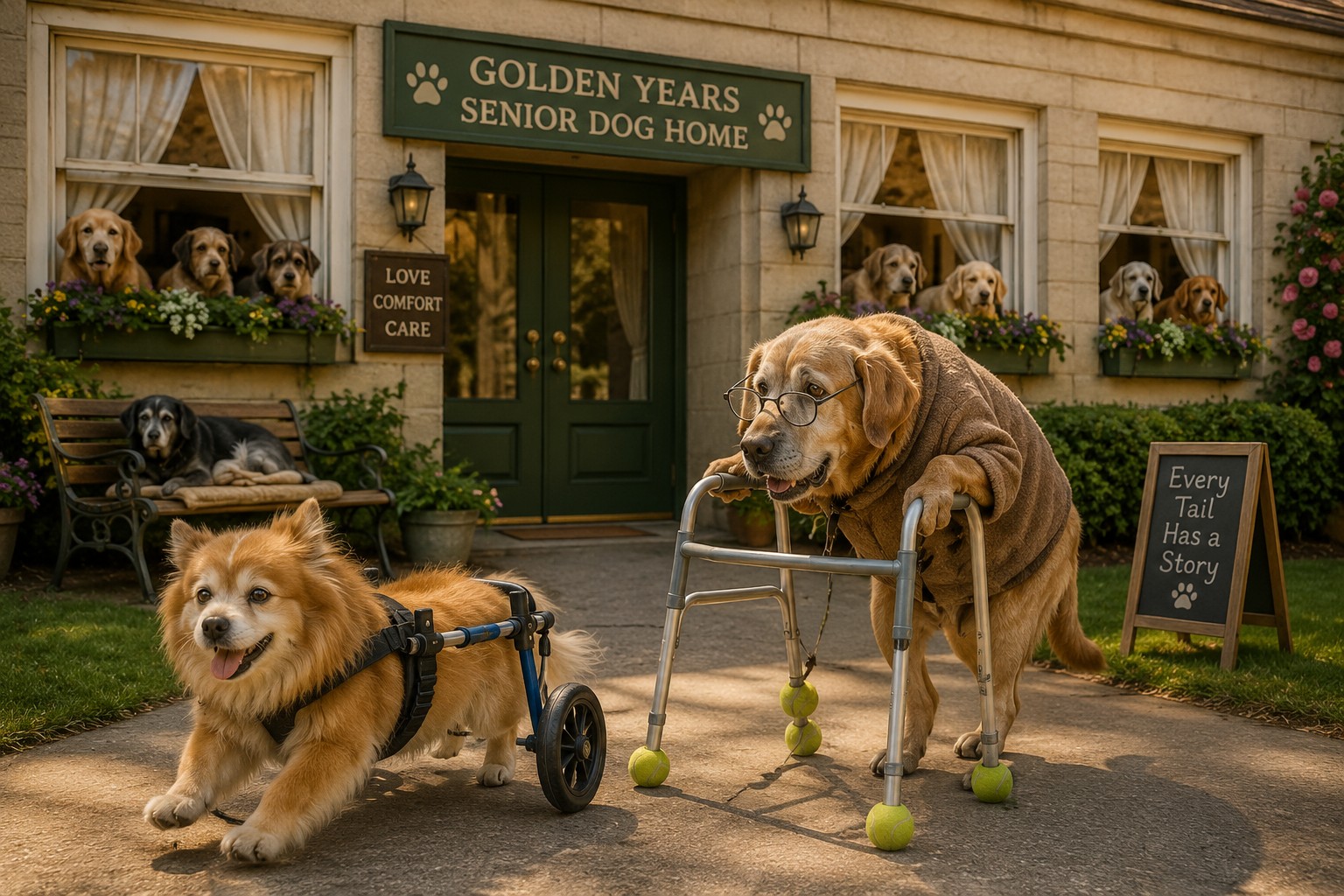
Nobody notices the exact day it happens. There isn’t a single morning where an old dog suddenly becomes an old dog. It’s the third time this month he’s hesitated at the bottom of the stairs. The walk that used to take twenty minutes now takes thirty, and he doesn’t seem to mind the extra time. He sleeps a little heavier, wakes a little stiffer, and needs a moment before he’s properly up and moving. None of it is alarming on its own. All of it, together, is what ageing actually looks like.
The Slow Accumulation of Small Changes
Vets sometimes describe senior dog decline as a series of small subtractions rather than one dramatic event. A bit less enthusiasm for the stairs. A bit more time spent sleeping. A slightly shorter fuse with the younger dog at the park who used to be a favourite playmate. Owners tend to explain each change individually, and often reasonably, an off day, a cold floor, a bad night’s sleep, right up until enough of them accumulate that the pattern becomes impossible to miss.
This gradual quality is part of why CBD conversations with senior dog owners tend to look different from conversations about, say, a young dog with acute anxiety. There’s rarely one clear trigger to respond to. It’s more often a general, creeping decline that owners are trying to slow down or make more comfortable, not reverse.
What’s Actually Changing in an Ageing Dog’s Body
Joint cartilage wears down with age and repeated use, which is the most visible driver of the stiffness and reluctance to jump or climb that so many senior dog owners describe. Inflammation tends to run at a slightly higher baseline in older joints, which is part of why mornings are often harder than afternoons, the body needs time to loosen up after a night of stillness.
Beyond the joints, the nervous system changes too. Some older dogs develop a condition vets refer to as canine cognitive dysfunction, which shares some surface similarities with dementia in humans: disorientation, disrupted sleep cycles, increased anxiety, and sometimes what looks like confusion about familiar surroundings. Not every senior dog develops this, but for the ones who do, it’s often more distressing for the dog, and the owner, than physical stiffness alone.
Where CBD Actually Fits Into This Picture
CBD isn’t a treatment for arthritis or cognitive decline, and it’s worth being upfront about that rather than overselling it. What it may support, based on both the endocannabinoid system’s known role in regulating inflammation and pain signalling, and what a considerable number of senior dog owners report anecdotally, is a more comfortable day-to-day experience alongside whatever else your vet has recommended, whether that’s joint supplements, prescription pain management, or dietary changes.
The distinction matters. CBD sitting alongside a vet-guided plan is a very different thing from CBD replacing one. We’d always frame it as the first, never the second.
What the Research Actually Says
A frequently cited 2018 Cornell University study on osteoarthritic dogs found that a majority of dogs receiving CBD showed improved comfort and activity levels, based on both owner assessment and veterinary evaluation, with no significant side effects reported during the study period. It’s one study, with a specific dosing protocol, and it shouldn’t be read as a blanket guarantee, but it’s a genuinely useful data point rather than pure anecdote.
Wider research into CBD and inflammation in ageing joints is still catching up to the level of anecdotal interest from pet owners, which is a fair and honest thing to say rather than pretending the science is more settled than it is.
Dosing for a Senior Dog Isn’t Quite the Same as for a Younger One
Body weight is still the starting point, exactly as it is for any dog. But two things shift specifically for older dogs. First, many senior dogs are on other medications already, for pain, thyroid conditions, or heart issues, and CBD can interact with how the liver processes certain drugs. This is the single most important reason to loop your vet in before starting, more so than with a young, otherwise healthy dog.
Second, older bodies sometimes process compounds more slowly than younger ones. That doesn’t necessarily mean a lower dose is automatically right, but it does mean giving a new dose more time before judging whether it’s working, and watching a little more closely for any change in appetite or energy in the first week or two.
A Realistic Timeline for Noticing a Difference
With joint-related stiffness specifically, owners who’ve been through this tend to describe a similar pattern: not much visible change in the first week, a little more willingness to take the stairs by week two or three, and a clearer, more settled pattern by around the one-month mark. This is slower than owners often expect going in, and setting that expectation upfront tends to prevent people giving up on a product that simply needed more time.
When to Involve Your Vet Before Starting
- Your dog is already on prescription medication, especially anything processed by the liver
- You suspect cognitive decline rather than purely physical stiffness
- There’s been a sudden, rather than gradual, change in behaviour or mobility
- Your dog has an existing liver or kidney condition
- You’re not sure whether what you’re seeing is normal ageing or something that needs diagnosis first
A sudden change is worth a vet visit regardless of CBD, since it’s more likely to point to something specific and treatable than gradual ageing typically does.
Introducing CBD to an Older Dog
Start at the lower end of the weight-based dosing range, give it consistently at the same time each day, and resist the urge to judge the product within the first few days. A simple log, even just a note on your phone of mobility, mood, and appetite, makes the gradual changes far easier to spot than relying on memory alone, especially since the whole point of ageing-related decline is that it’s easy to miss day to day.
Frequently Asked Questions
At what age is a dog considered senior?
This varies by breed and size. Smaller breeds are often considered senior around 10 to 12 years, while larger breeds may reach that stage as early as 6 to 8 years, since larger dogs generally have shorter lifespans and age proportionally faster.
Can CBD help with canine cognitive dysfunction specifically?
Some owners report calmer behaviour and more settled sleep patterns, but research specific to CBD and canine cognitive dysfunction is limited. This is a case where veterinary guidance matters more than general dosing advice.
How long before I notice a difference in my senior dog?
For joint-related stiffness, most owners report a gradual improvement over two to four weeks of consistent daily use, rather than a sudden change.
Is CBD safe alongside my senior dog’s other medications?
It can be, but CBD is processed by the liver and can interact with certain medications also metabolised there. Always check with your vet before combining CBD with existing prescriptions.
Should I choose a different CBD strength for a senior dog?
Not necessarily a different strength, but dosing should still be calculated based on your dog’s current weight, and introduced more gradually than you might with a younger, otherwise healthy dog.
Written by Carmen Dos Anjos Germano, Founder of Pure CBD4U
Carmen founded Pure CBD4U after her own search for reliable, high-quality CBD oil, starting with full spectrum CBD oil 5% as part of her personal wellness routine. That experience shaped the company’s focus on transparency, quality and independent testing. Pure CBD4U works with EU-grown hemp, uses third-party laboratory testing, and makes batch results accessible through QR codes on its products. Carmen remains closely involved in product selection, quality standards and the development of the Pure CBD4U range.

Leave a Reply