
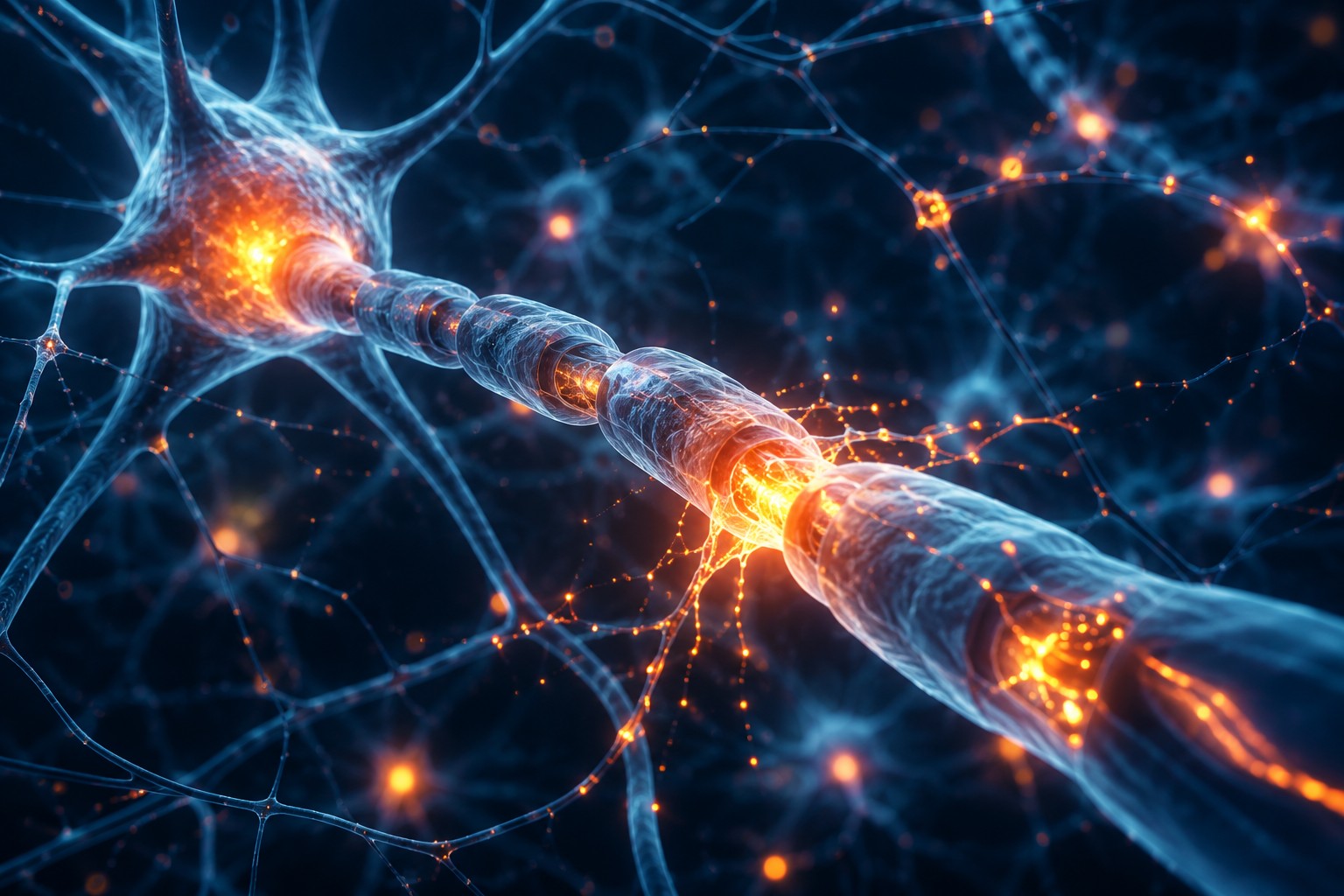
What if the human body contained over 60,000 miles of electrical wiring — enough to circle the planet more than twice? In a very real sense, it does. That’s the nervous system: a vast network constantly carrying electrical signals from the brain to every muscle, joint, organ, and fingertip, coordinating everything from a heartbeat to the precise pressure needed to hold an egg without cracking it. Normally, all of this happens silently, instantly, entirely without conscious effort. But what happens when the wiring itself becomes damaged?
A Different Kind of Pain Entirely
Nerve pain doesn’t behave like other pain, and the wiring analogy explains why. Muscle or joint pain is usually the signal itself reporting real damage — a strained muscle correctly relaying that something’s wrong. Nerve pain is different: it’s the wiring itself misfiring, sending signals that don’t accurately reflect what’s actually happening in the tissue. That’s why people describe it in such distinctive terms — burning, shooting, stabbing, electric shocks, tingling, pins and needles, numbness. These aren’t just more intense versions of an ordinary ache. They’re a fundamentally different kind of sensation, because the message itself has become corrupted somewhere along the line, like static or crossed wires on a damaged cable, rather than an accurate report of tissue-level damage.
Why the Wiring Gets Damaged
Nerve pain can stem from a genuinely wide range of underlying causes, and it’s worth saying plainly: nerve pain is a symptom, not a diagnosis in itself — a signal that something specific has affected the nervous system’s wiring, with the actual cause needing its own identification and attention. Diabetes is one of the most common causes, since prolonged high blood sugar can damage peripheral nerves over time, a condition known as diabetic neuropathy. Shingles can leave lasting nerve damage in its wake, producing pain that persists well after the rash itself has cleared. Spinal problems and trapped nerves compress or irritate nerve tissue directly, disrupting signals at the point of compression.
Injuries can damage nerves directly, whether through a specific traumatic event or gradual repetitive strain. Chemotherapy is a recognized cause of nerve damage in some patients, a side effect that can persist after treatment ends. Multiple sclerosis affects the nervous system’s own insulation, disrupting how signals travel. Surgery, particularly procedures near major nerve pathways, can occasionally result in nerve pain during recovery, sometimes temporary, sometimes lasting longer. Each of these causes represents a different kind of “wiring damage,” which is exactly why nerve pain from diabetes and nerve pain from a spinal issue, despite feeling superficially similar, may need quite different approaches to manage well.
What Ordinary Life Looks Like With Damaged Wiring
For someone living with nerve pain, some of the most mundane daily moments become unexpectedly complicated. Putting on socks can mean fabric against skin registering as far more intense than it should. Walking barefoot across an ordinary floor can produce sensation entirely disproportionate to what’s actually touching the foot. Typing, holding a steering wheel, or simply resting a hand on a table can all trigger discomfort in skin that looks, and by any objective measure is, completely fine. Sleep is often disrupted by sensations that seem to intensify at night, when there’s nothing else competing for attention. Even a light, gentle touch on the skin — a hand, a bedsheet, a light breeze — can sometimes register as pain rather than the harmless sensation it would be for anyone else.
This is hypersensitivity in plain terms: nerves that have become oversensitive, amplifying or misinterpreting ordinary sensory input as something far more intense. Altered sensation covers the broader category of sensory misfires — tingling, burning, a sense that something is crawling on the skin when nothing is there at all. Numbness is, in a sense, the opposite problem: signal loss rather than signal distortion, an area that should feel a normal touch registering little or nothing instead. All three are versions of the same underlying issue — wiring that isn’t transmitting information accurately, whether it’s sending too much, the wrong kind, or not enough.
Where CBD Enters the Conversation
It’s within this specific, often frustrating reality that CBD has become something many people with nerve pain look into — and neuropathic pain happens to be one of the more researched areas of cannabinoid science relative to some other pain conditions, even though the overall evidence remains genuinely mixed.
CBD’s interaction with the endocannabinoid system, which has documented involvement in pain signaling and inflammatory regulation, rests on established pharmacology, and cannabinoid receptors are present throughout the peripheral and central nervous system, offering a plausible mechanistic pathway for cannabinoids to influence nerve-related pain signaling specifically. Laboratory research has shown CBD affecting pain-signaling pathways relevant to neuropathic pain under controlled conditions, and animal studies modeling nerve injury and diabetic neuropathy have shown reduced pain behavior in several cases — encouraging, mechanistically grounded findings.
Human clinical trials specifically on CBD and neuropathic pain are more developed than in some other pain categories, but the results across these trials remain genuinely mixed — some report meaningful reductions in neuropathic symptoms, while others show more modest or inconclusive results, and study quality and design vary considerably across this body of research. Patient reports describing reduced burning, tingling, or overall discomfort are common, particularly with topical application over affected areas, and are worth taking seriously as a signal — though patient reports remain a different category of evidence than a well-controlled clinical trial. It would be inaccurate to claim CBD is an established, effective treatment for neuropathic pain based on current evidence, and equally inaccurate to dismiss the research entirely — the honest position sits somewhere in between: a genuinely active, more developed research area than many, without yet reaching a firm, unanimous conclusion.
| What the evidence shows, honestly Established: cannabinoid receptors are present throughout the nervous system’s pain pathways Animal studies: reduced pain behavior in several neuropathic and diabetic neuropathy models Human trials: more developed than for some pain types, but results remain genuinely mixed Not established: CBD as a proven, reliable treatment for neuropathic pain |
Why Nerve Pain Is Difficult to Treat
Nerve tissue heals slowly, if it heals at all — a meaningfully different situation from a muscle strain that typically resolves within days or weeks. Some nerve damage recovers over time, particularly when the underlying cause is identified and addressed early. Some damage, depending on the cause, extent, and duration, does not fully reverse, and in those cases, treatment aims to manage symptoms and improve quality of life rather than eliminate the underlying damage entirely. This is worth understanding clearly, since it shapes realistic expectations: for a lot of neuropathic pain, the goal isn’t a cure but effective, ongoing management — a genuinely different framework than treating an injury expected to fully heal.
Supporting Nerve Health
Alongside whatever specific medical treatment addresses the underlying cause, several broader habits support nerve health and overall wellbeing. Managing underlying conditions directly — blood sugar control for anyone with diabetes-related nerve damage, for instance — addresses the root cause rather than only the symptom, and is often the single most impactful step available where applicable. Physiotherapy can help maintain function and mobility despite nerve-related symptoms, and gentle movement, appropriately tailored, supports circulation and overall nerve health without adding unnecessary strain.
Sleep plays a genuine role in pain perception and the body’s broader recovery processes, and stress reduction matters too, since stress can amplify how pain signals are perceived and processed. Balanced nutrition supports overall nerve and metabolic health, particularly relevant for conditions like diabetic neuropathy where nutritional management plays a direct role. CBD, within this broader picture, may be something some people discuss with a healthcare professional as one possible supportive addition — not a substitute for treating the underlying cause, and not a replacement for professional medical guidance given how varied and serious some causes of nerve pain can be.
Back to the Wiring
Those thousands of electrical messages are still traveling through your body right now, every second, mostly in complete silence — the ordinary, extraordinary background hum of a functioning nervous system. Most of the time, nobody notices any of it. When that wiring becomes disrupted, though, even the smallest, most ordinary signal — fabric against skin, a light touch, a bedsheet at night — can become impossible to ignore.
For some people, CBD becomes one supportive part of an overall wellness routine alongside whatever’s addressing the underlying cause. But understanding what’s actually driving the nerve pain in the first place, and working closely with a healthcare professional to address it, remains the single most important step toward managing it well — considerably more important than any one product added on top.
This article is intended for general educational purposes and is not medical advice. CBD is not a proven treatment for nerve pain or neuropathy. Nerve pain can have serious underlying causes and should always be evaluated by a doctor or qualified healthcare professional.
Written by Carmen Dos Anjos Germano, Founder of Pure CBD4U
Carmen founded Pure CBD4U after her own search for reliable, high-quality CBD oil, starting with full spectrum CBD oil 5% as part of her personal wellness routine. That experience shaped the company’s focus on transparency, quality and independent testing. Pure CBD4U works with EU-grown hemp, uses third-party laboratory testing, and makes batch results accessible through QR codes on its products. Carmen remains closely involved in product selection, quality standards and the development of the Pure CBD4U range.

Leave a Reply